Subjects





Max Leopold Wagner is recognized today as one of the greatest scholars of Romance languages of the twentieth century and as the greatest expert in the Sardinian language, to the knowledge of which he has contributed with works that are now part of the classical bibliography of our island. Perhaps less well-known are his “Travel Images”, a fresco of the passage on the island of a man with a vast, extraordinary polyglot culture, who arrives there to begin his language studies, but who soon realizes the importance of knowing first of all the region and its people: “I set out to myself the purpose of knowing first of all the territory, its antiquities, its life and its customs, rather than that of carrying out linguistic research. However, as the journey progressed, linguistic interests came to the fore.” This is what the Bavarian says in an essay written a few years before his death in Washington in 1962. So he too is first and foremost a traveler, he travels the island far and wide on horseback riding a bicycle and, like many before him, he observes, takes notes, knows facts and people: “Having traveled the island - has put me in close contact with the Sardinian people and has given me the opportunity to learn about their reserved, but noble and proud character, and to experience their traditional hospitality countless times first-hand”.
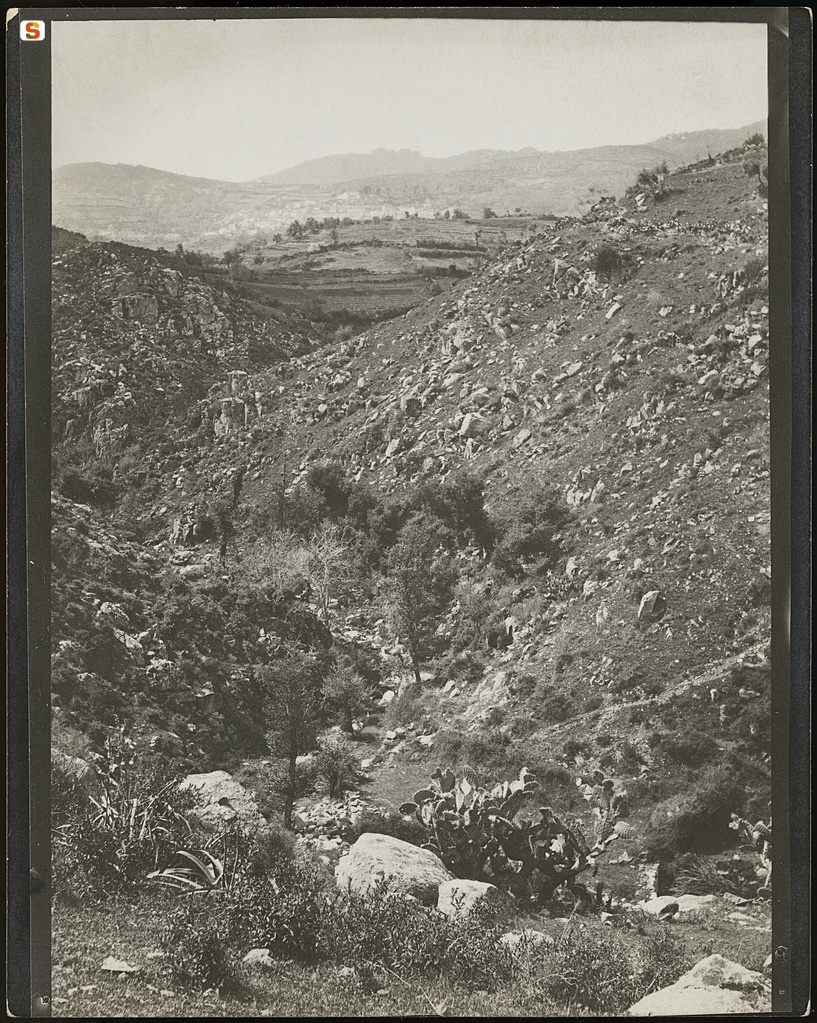
Wagner, born in Munich in 1880, arrived on the island just twenty-four years old, in 1905, thanks to a scholarship from the University of Munich, and from this first experience he drew a series of articles that appeared in the German ethnography and geography magazine “Globus”, between 1907 and 1908. He arrived as a first stop in Cagliari and stayed there for about six months. He learned the dialect of the capital and then moved to Sulcitano and the Gennargentu region. In 1906 he expanded his spatial horizons and covered all other Sardinian regions, visiting more than seventy locations. He has a camera with him and creates a series of images that, together with descriptions of the landscape and customs, constitute an important testimony of aspects and tools of material culture. A Wagner therefore partly unknown, capable of colorful and poetic descriptions, unprecedented compared to the best-known role of the great and scrupulous Sardinian-speaking scholar.
Update
Texts

Author : Bruscagli, Alessandra
Author : Bruscagli, Alessandra
Results 2 of 1461180
View All


 Facebook
 Twitter
 LinkedIn
 Whatsapp

 Print
Print
 E-mail

Comments