Follow us on
Search Search in the site

Photography

Photography

Photography
Cagliari, Basilica of San Saturno. Photo from Fondo Wagner Ilisso, 1905, in Sardegna Digital Library

The interest in photographic material related to Sardinia on the part of enthusiasts, scholars, schools and universities is considerably widespread. The photographic image contains a series of objective information of great value for the knowledge and study of our past and our culture. However, its usability is difficult, as is its overall vision, due to the dispersion of the material in numerous conservation institutions, public and private, not only Sardinian or Italian but also European and American, which are not always accessible to users. Its extreme fragility and perishability are also decisive for the preservation of this material: all photographic procedures, ancient and modern, practiced in a more or less perfect way, cannot guarantee the duration of the image beyond a certain period, during which it is subject to chemical alterations that cause its gradual and inexorable disappearance. Sorting, reproduction and archiving on digital media, implemented with the best technologies available today and according to the most accredited criteria, can guarantee the preservation of at least the iconographic data, as well as facilitate its consultation, study and educational and editorial use.

Arbatax station. Photo by Vittorio Besso, 1888, from Sardegna DL
Article
Nineteenth-century photography
Legend has it that Joseph Nicéphore Niépce (1765-1833), one of the putative fathers of photography, came up with the idea for his proto-photographic experiments just as he was off Cagliari, during the French siege of the...
Read everything Read everything
Cagliari, 'Picciocheddus de Crobi' in the port pier. Photo by Max Leopold Wagner, from Sardegna DL
Article
Photography in Sardinia
Today, the interest in photographic material related to Sardinia on the part of enthusiasts, scholars, schools and universities is now undeniable. The photographic image contains, in fact, a series of objective informati...
Read everything Read everything
Oristano, potter's shop, detail. Photo by Max Leopold Wagner, from Sardegna Digital Library
Article
Photography in the Twentieth Century
During the twentieth century, the new technique spread widely, branching out into countless possibilities for uses. In Sardinia, the role of photography in spreading knowledge is significant.
Read everything Read everything
Orgosolo 1962. Henri Cartier-Bresson Photos
Article
The Magnum Photos
“To be in place, to be there because you wanted to” (Marc Riboud). “A photojournalist is nothing if they don't have their negatives” (Robert Capa).
Read everything Read everything
Signore con berretto della Soc. Canottieri Ichnusa in bicicletta
Article
Photographic archives
Since 1839, photography has quickly taken on a role in communication and a documentary function for places, stories and events, both private and public. The importance of preserving photographic archives that recount the...
Read everything Read everything
Veduta di Cagliari, stampa in mezzatinta, 1907. ISRE, Collezione Pio Colombini. Da Sardegna Digital Library.
Article
Photographic postcards
Postal cards may seem like an outdated relic of the past, yet until the early 2000s they were still commonly sent as greetings from a holiday, as a thank-you note, or as a brief message.
Read everything Read everything
Bosa, Giovanni Stonecutters. Photograph by Wolfgang Suschitzky, 1948
Article
Documentary photography
The documentary function of photography, grounded in its adherence to the reality it depicts, has been, since its origins in Paris in 1839, one of its most fascinating and at the same time most useful features.
Read everything Read everything

Insights

View All View All

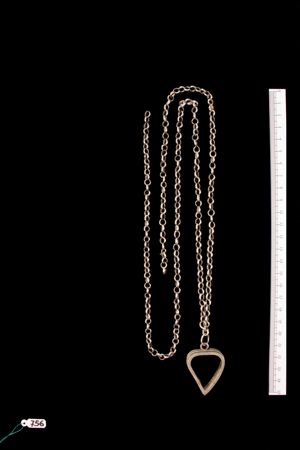
RELIQUIARIO (TECA DI) CON CATENA

Teca di reliquiario cuoriforme in argento con bordo inciso, sullo spessore filo intrecciato tra fili ritorti, occhiello e catena #a giunchìgliu# spezzata.

Read everything Read everything Teca di reliquiario cuoriforme in argento con bordo inciso, sullo spessore filo intrecciato tra fili ritorti, occhiello e catena #a giunchìgliu# spezzata.

Comments

Write a comment

Send