Subjects





Every era and every culture is characterized, among other things, by its ability to elaborate peculiar expressions of what we call 'art'.
This also applies to the Nuragic civilization that knew how to express its identity also through artistic form.
As already with the prenuragic age, even for the Nuragic age we have a series of material culture products that testify to the manifestation of an articulated aesthetic sense.
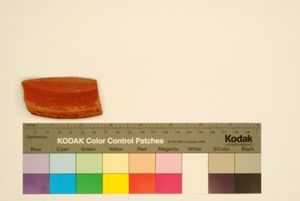
This aesthetic sense was expressed in its simplest form, first of all, on the surfaces of vascular ceramic productions, manifested in two ways: both with the 'presence' (two examples: the 'metopal' decoration and the 'comb' decoration) and with the 'absence' of vascular decoration.
By “absence” we mean precisely the total lack of decorative elements that characterizes different vascular types of Nuragic age, especially in the oldest phases.
It is not, as it might seem, inappropriate to point out this absence as pertinent to the aesthetic dimension: in fact, it clearly expresses the satisfaction of the Nuragic people for an aesthetic choice that is not afraid to offer visual perception the pure functional form of everyday objects and this is by no means trivial evidence from a cultural point of view.
Turning to artistic productions in the proper sense, we must remember the small bronze sculptures (the 'bronzes') and the large stone statuary (the 'giants' by Monti Prama).
Update
Audio


 Facebook
 Twitter
 LinkedIn
 Whatsapp

 Print
Print
 E-mail


Comments