Subjects





“Thanks to the wise direction and advice of the island's first archaeologist, Canon Spano, the archaeological treasures of this country so little known, an entire world of antiquity - antiquity whose importance for Sardinia so far no work has clarified the importance for Sardinia.”
Thus, in his preface, Maltzan (1826-1874) writes, a German baron born in Dresden to a noble and wealthy family, and educated in England and Vienna. The work, whose original title is “Reise auf der Insel Sardinien nebst einem Anhang über die phönicischen Inschriften Sardiniens”, was released in Leipzig in 1869 and was translated into Italy, where it was released with some success in 1886, by Captain Prunas Tola with the help of his German teacher.
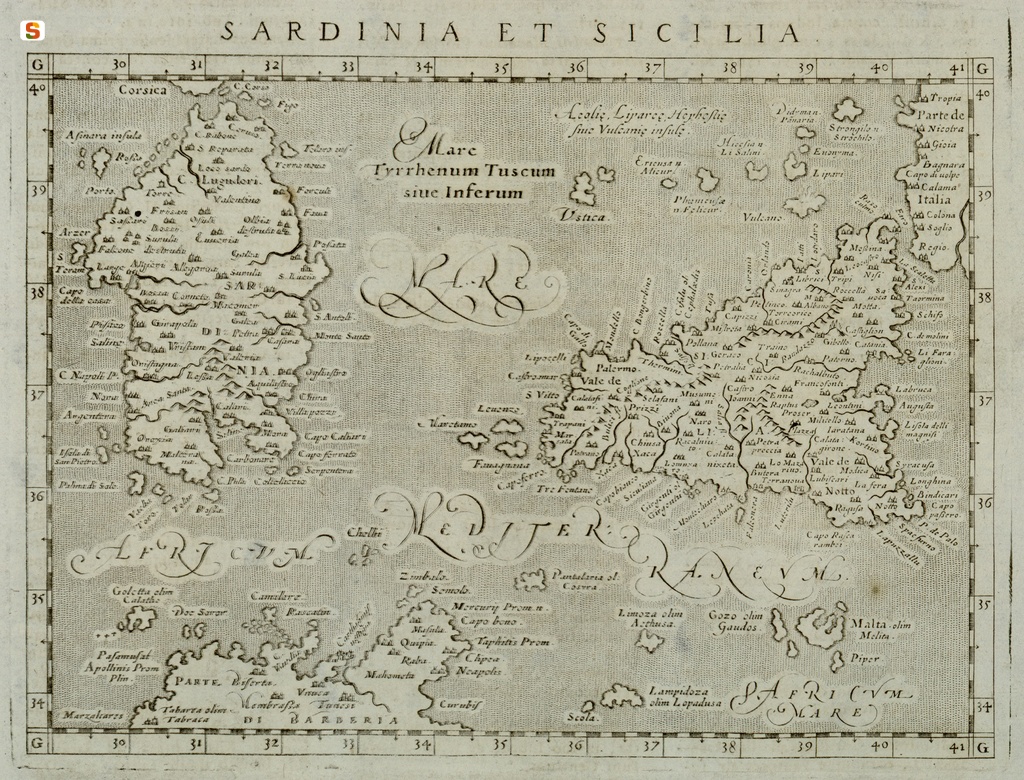
Maltzan is an adventurous traveler, forced for health reasons to benefit from the mild climate of Africa and the Near East. He then began to travel in 1852 and continued, amidst dangers and adventures, until his death, committing suicide in Pisa in 1874. He visited the island in 1868. He is an attentive observer, who, thanks to the help of Canon Spano, focuses particularly on history and archeology, citing and collecting documents, maps and illustrations. He begins his journey from Cagliari, whose streets he walks “as if in joy” and which he describes accurately as soon as he disembarks at the narrow entrance of the port. He then continues in the Iglesiente, telling about the mines and their history, describing Monteponi, Montevecchio, San Giovanni, and on to Sassari, where he emphasizes “the strangeness”, the cultural and linguistic detachment from the rest of the island. He describes his life and customs, language and intellectual pride, but denigrates his monuments, calling his churches “architectural abortions.” It then travels along the northern and eastern coasts (“the most poorly cultivated and least uncivilized coastal stretch”). He dedicates the last chapters respectively to Sardinian folk poetry, to geology and mineralogy, to flora and fauna; a chapter is then reserved for the “national” history of the island, however affected by the “Tree Papers”, of which he describes the contents and tells the genesis, cards that later turned out to be false but which then intoxicated not only travelers but a large part of the Sardinian “intelligentsia”, drawing many into the error of a grossly invented island story.
Update
Images
Texts

Author : Deliperi, Antonio Costanzo
Year : 1992
Author : Deliperi, Antonio Costanzo
Year : 1992
Results 2 of 898331
View All


 Facebook
 Twitter
 LinkedIn
 Whatsapp

 Print
Print
 E-mail

Comments