Subjects





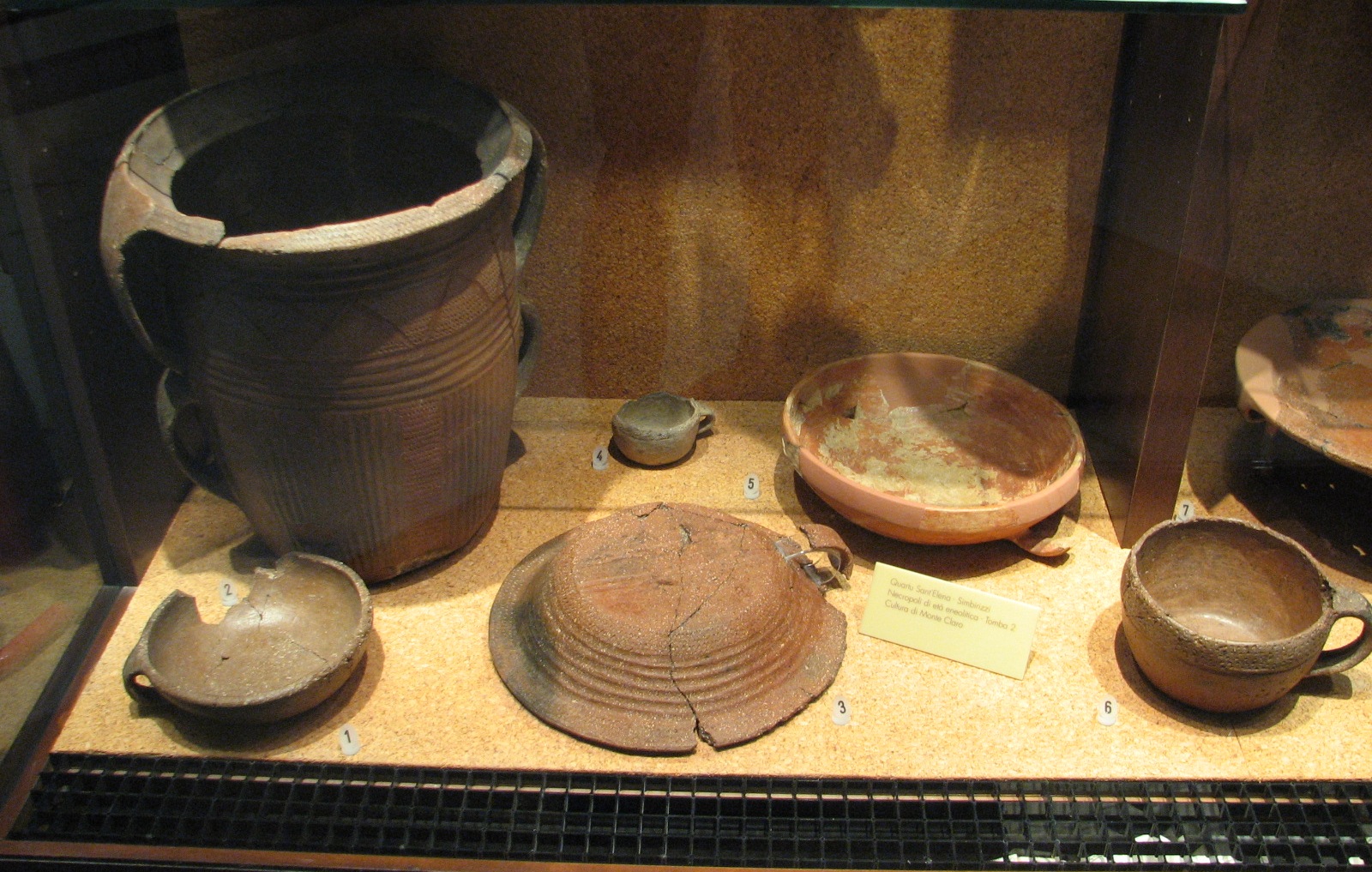
With the transition to the recent Eneolithic period (2400-2100 BC), we witnessed the appearance of the Monte Claro culture, which takes its name from the hill of Cagliari where some tombs were discovered with their typical ceramic productions. The archaeological data testify, for this phase, to the affirmation of the organized living space of the village.
With the transition to the recent Eneolithic period (2400-2100 BC), we witnessed the appearance of the Monte Claro culture, which takes its name from the hill of Cagliari where some tombs were discovered with their typical ceramic productions.
These are large vases (the situles), tripods, bowls, bowls, characterized by the color of the surfaces that varies from hazel red to light hazel and blackish brown. Also typical is the decoration with vertical and horizontal ribs or grooves, as well as the “sheer sheer” decoration that distinguishes some shapes.
Update


 Facebook
 Twitter
 LinkedIn
 Whatsapp

 Print
Print
 E-mail


Comments