Subjects





Before the spread of a dense network of electric public mills, which took place between the two world wars, there were basically two systems used for milling cereals: the asinaria mill, a variant of the ancient Roman mill, present all over the island at a domestic level, but especially in the areas of the South, and water mills
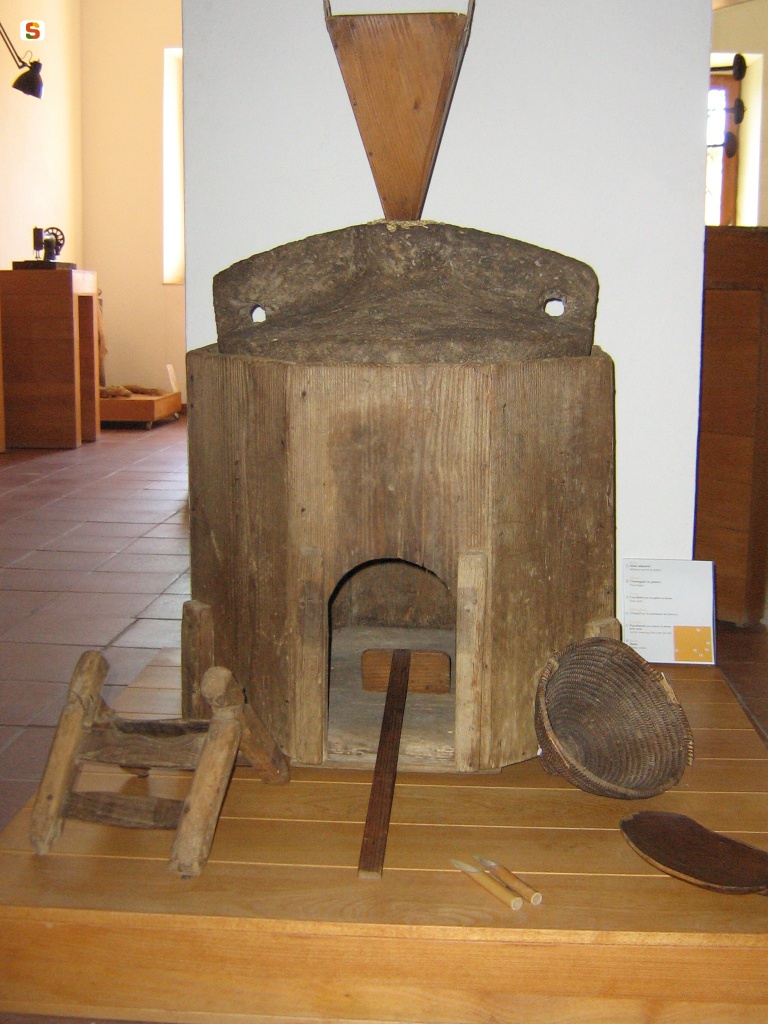
The asinaria mole (sa mola), whose use has demonstrated a tenacious persistence in Sardinia for socio-economic reasons, currently adorns urban gardens and courtyards, and is often exhibited in ethnographic museums in Sardinia, having acquired the status of a symbol of the peasant past, an object of affection and a powerful symbol of cultural memory.
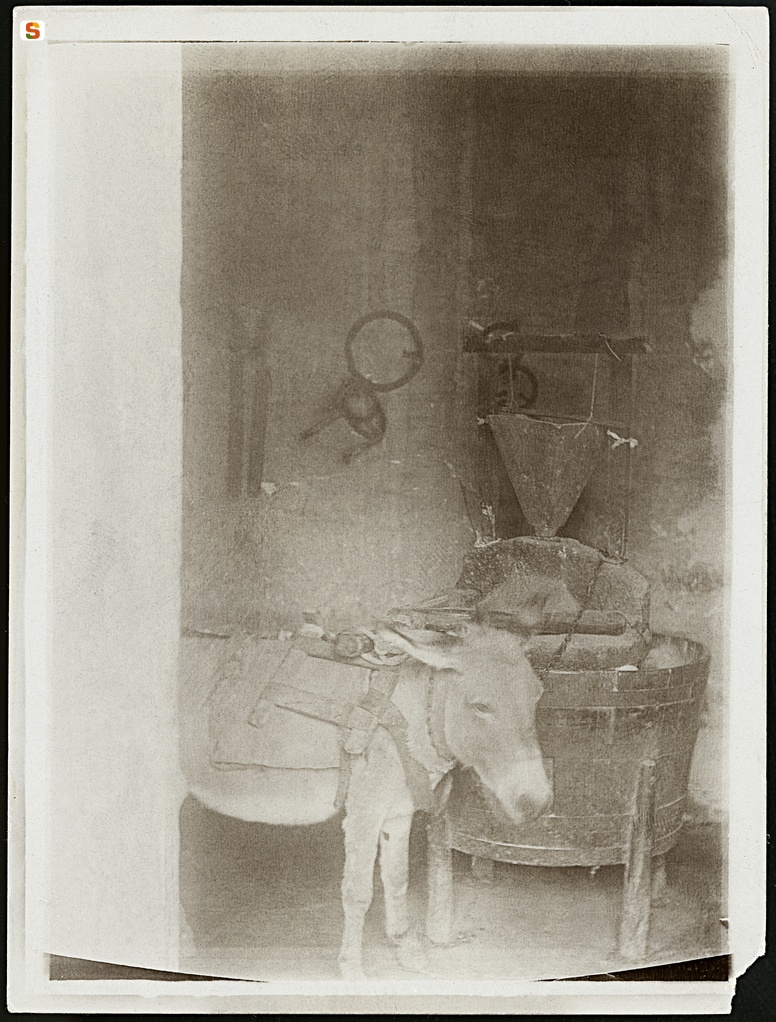
It has uniform characteristics throughout the island. The only variable elements are the construction materials and, to a lesser extent, the dimensions. The mills were made of volcanic stone (basalt, tuff, trachyte), while the collection container was generally made of stone or wood and equipped with a door that allowed the extraction of the ground. The hopper, made of wood or straw and rattan, was held suspended by beams, small planks and cords from the ceiling or a wall; or it was supported by an independent
frame.Despite its archaicity and apparent simplicity, the asinaria wheel was able, thanks to its technical characteristics, to produce flours suitable for the packaging of aesthetically refined breads, such as those for ceremonial use. The millstones were both grooved; between the hopper and the grinder, a small grain flow regulator was generally placed, made of wood, cork or leather, with the possibility of modifying and adjusting the fineness of the ground, accelerating or slowing down the flow speed of the
grains themselves.
The place of the wheel in the house was never random. In a special room in the courtyard, in a corner of the porch or kitchen, depending on the type of housing and social condition, the location of the wheel had to make it possible to hear the characteristic sound of stones spinning empty, in order to control and incite the specially trained donkey (on molente — i) that operated it. Despite its low power source, the asinaria wheel could satisfy the needs of several families, linked by kinship, neighborhood
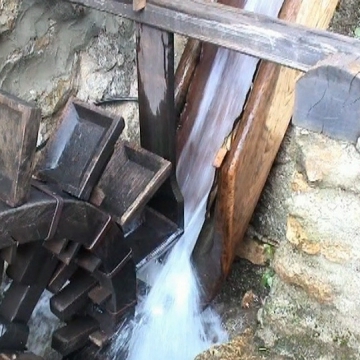
The hydraulic mills, on the other hand, were public facilities, located mostly in small cultivated and irrigated valleys, thanks to the channeling works necessary for the operation of the plant itself. Isolated or terraced, they were often associated with rubbish clearing and with washbasins sheltered by canopies. Those of the mills were, therefore, places, as elsewhere in Europe, intensely anthropized, today mostly deserted and wilted. The most common type of water mill in Sardinia is the horizontal wheel mill, simpler and more archaic, less productive, but better adapted to the environment than the more
famous vertical wheel mill.At the end of the 19th century, steam mills began to emerge in cities and large villages, replaced between the two world wars by electric mills that spread widely even in the countryside. Meanwhile, much more profound changes were taking place. The large molinology industry and public ovens, between the 1950s and the 1960s, took the cereal processing sector away from the local and family environment for the most part. Simultaneously with the activity of the last asinaria, the activity carried out by the network of small rural electric mills also
ceased.Update
Texts
Audio


 Facebook
 Twitter
 LinkedIn
 Whatsapp

 Print
Print
 E-mail


Comments