Subjects





The carnival in Gavoi begins on Shrove Thursday (Jobia Lardajola), so called because fava beans were prepared with lard for the occasion. There are no characteristic masks; music is the center of the party, the disguise is not important: the sound (on Sonu) is the mask.
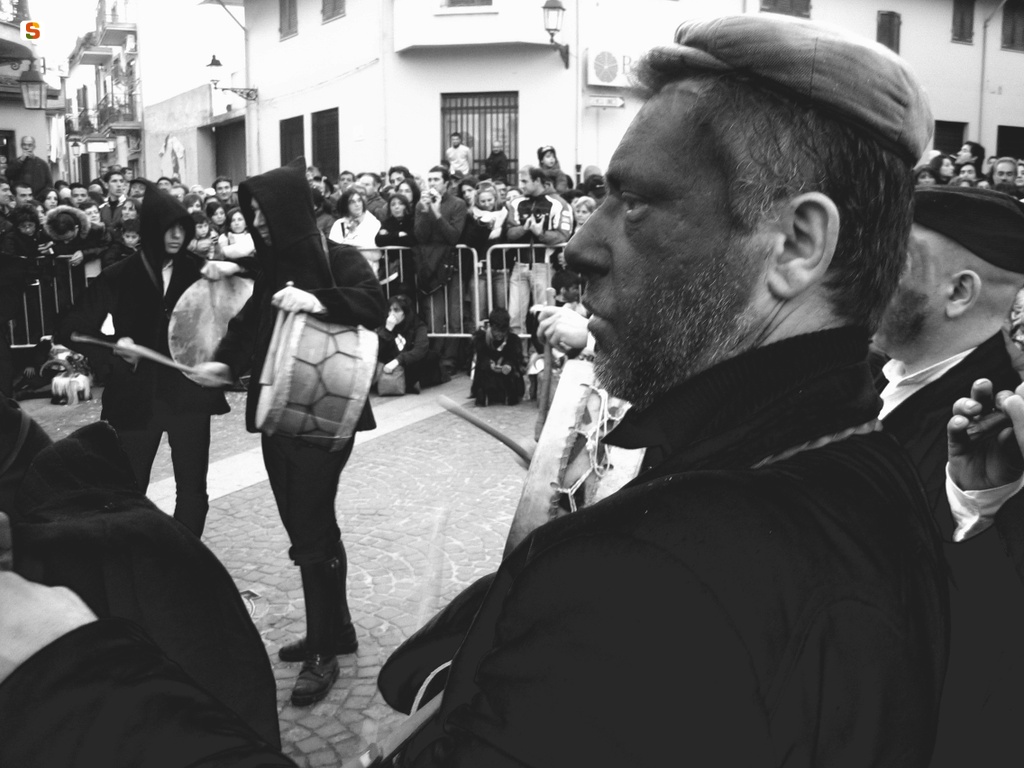
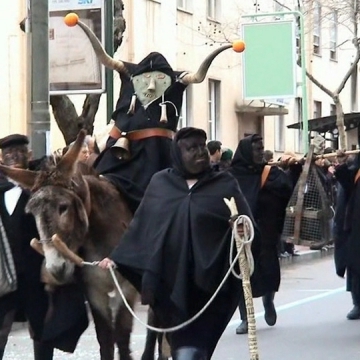
Adults and children parade wearing the typical velvet dress and wearing shoes called 'sos cosinzos' and 'sos cambales'. The protagonists of the party are the drummers, who gather in their hundreds (sa sortilla 'e tumbarinos), and their ancient musical instruments built entirely by hand with goat and sheep skins. The procession winds through the streets of the town center with drums that sound like crazy, accompanied by the sound of a cane pipe (on pipiolu). On Shrove Tuesday night, Zizzarone, a puppet that represents the king of carnival, carried through the streets of the town on a donkey or by a person is burned to say goodbye to the party, sometimes the puppets that represent his wife Marianna Frigonza and son Marieddu also end up at the stake. The carnival ends at dawn the following Wednesday, when “SOS intinghidores” with burnt cork draw a cross on the participants' foreheads. The sound of bells (su toku de sa retirou) marks the beginning of Lent.
The masks
Zizzarrone: a puppet formerly called Tiu Zarrone that represents the king of carnival, a victim destined to be burned at the final stake.
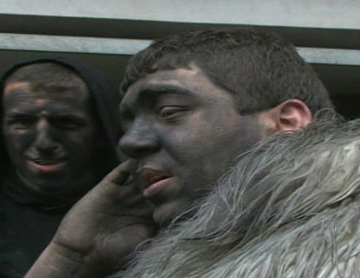
Sos Sonadores: the players, dressed in velvet clothes, leggings (sos gambales) and the flat cap (on bonette), with their faces blackened by soot.
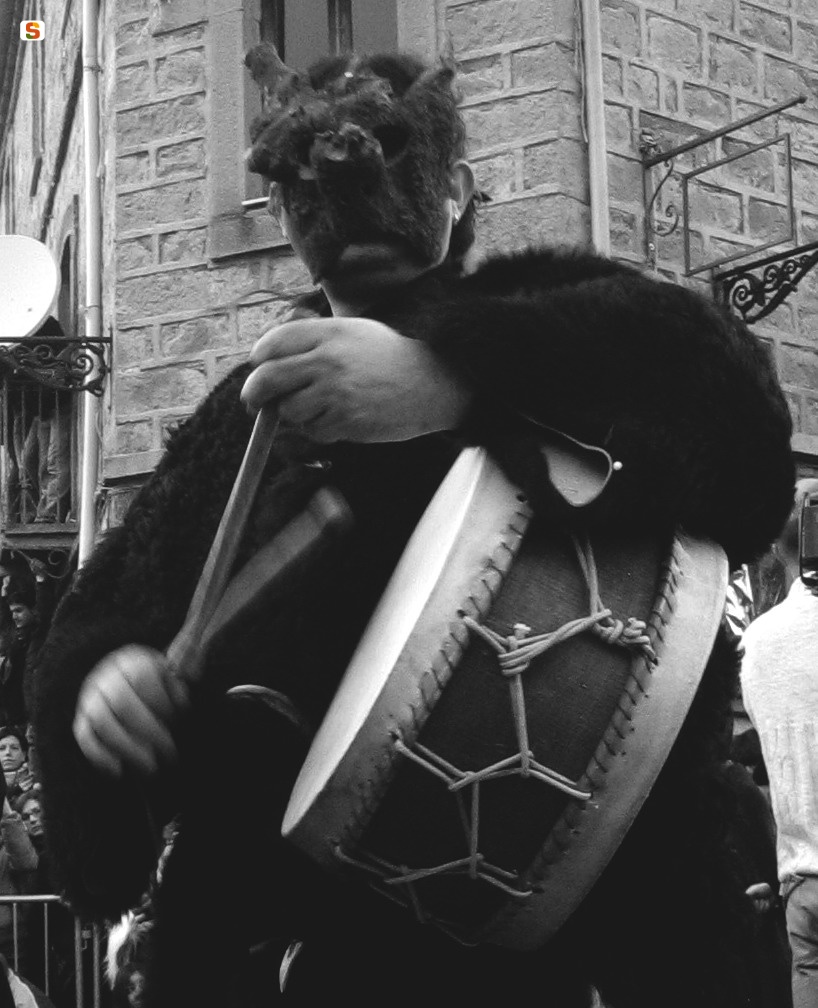
Sos tumbarinos: the drummers who hit instruments with chopsticks (sos mazzuccos).
Tools
Su Tumbarinu: drums made with flour sieves, wooden forms for pecorino cheese, old cork buckets used for milking and curdling cheese (sos malùnes) or large containers for storing wheat (sos majos). They make a dark sound.
On triangle: triangle made of wrought iron with the tips bent outwards, produces a high-pitched sound.
On tumborro: the lock, an instrument composed of a dried, swollen animal bladder used as a sounding board that is made to vibrate by a string as if it were a violin.
Su pipiolu: an ancient cane flute with round holes with a shaped piece of cork inside.
History
The Gavoese carnival has ancient origins. Characterized by festive and cheerful elements, unlike the darker ones of Barbagia, which recall the propitiatory rites offered to nature that awakens after winter.
Update
Texts

Author : Carnevale, Tony
Year : 2016
Author : Carnevale, Tony
Year : 2020
Results 2 of 770187
View All


 Facebook
 Twitter
 LinkedIn
 Whatsapp

 Print
Print
 E-mail
Comments