Subjects





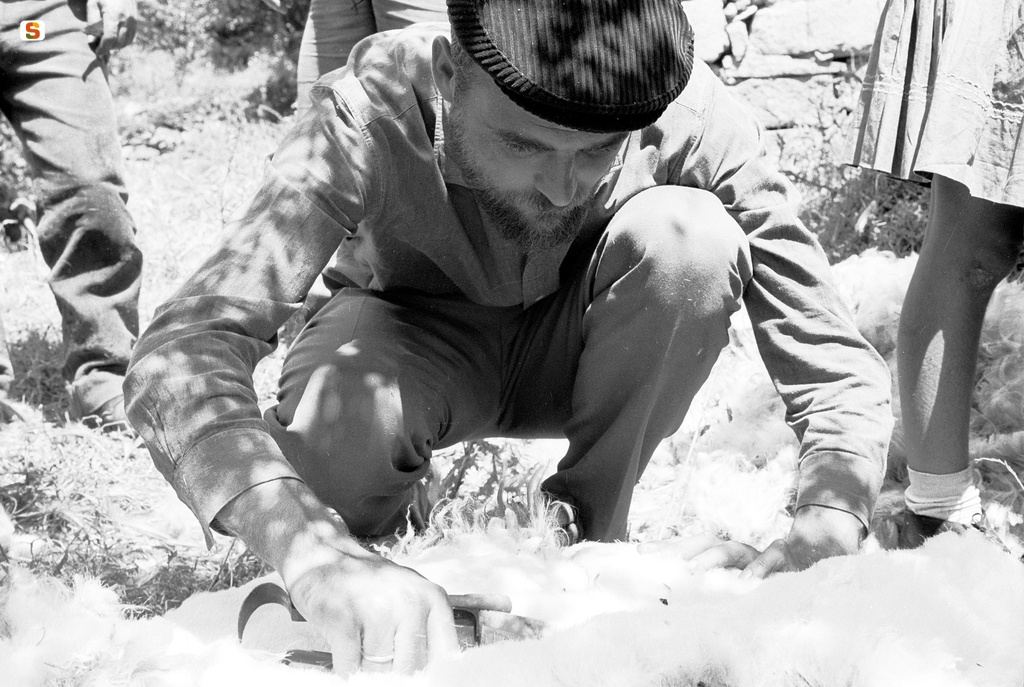
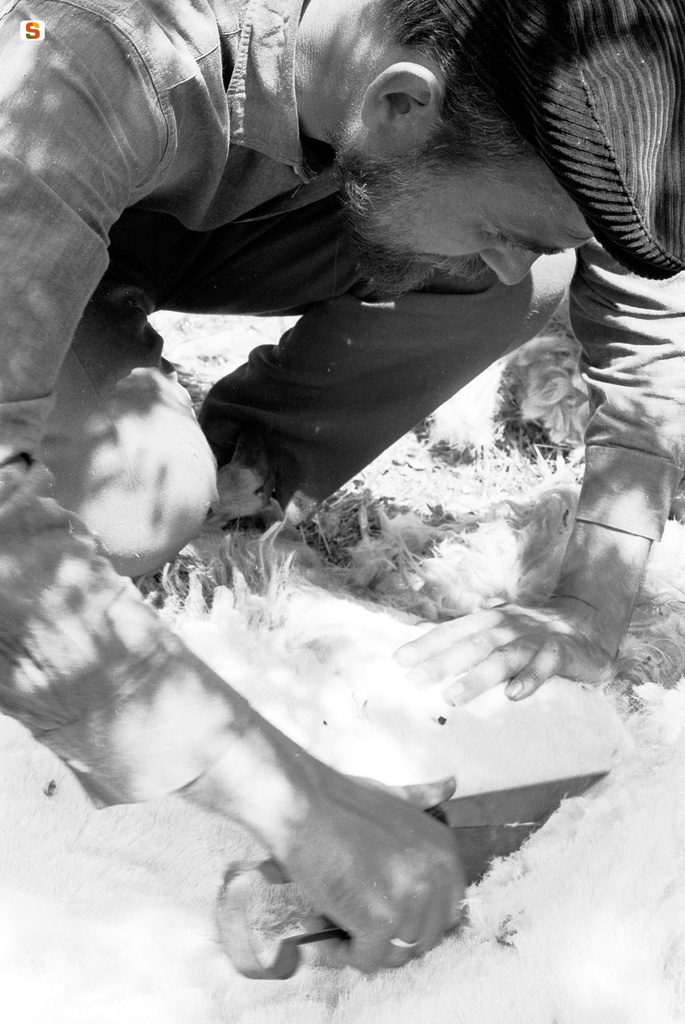
“That strongly built, tall, fair-haired man, who wandered through the streets of Ottana with a tape recorder in his hand and a twin-lens 6x6 Rolleiflex camera slung over his shoulder during Carnival week in 1958, certainly did not go unnoticed” (The Photographer and the Wooden Mask, 2013). The “strongly built” man was the Danish ethnomusicologist and anthropologist Andreas Fridolin Weis Bentzon, born in Copenhagen in 1936 and prematurely deceased there in 1971. Between the 1950s and the 1970s Bentzon spent long periods in Sardinia, conducting field research stays initially devoted to the launeddas and later more broadly focused on observing and describing the traditions, customs and structures of society in the Sardinian interior, particularly in the village of Nule. After studying languages, he enrolled in the Faculty of Anthropology, completed his university studies with a doctorate and then began teaching. Those who knew him remember him as a knowledgeable and talented scholar, guided by intuition and instinct, open and curious, often deeply involved on a personal level, as shown by his attachment to Sardinia and its inhabitants. From his first journeys around the mid-1950s, Bentzon developed a methodology that combined field observation, shared daily life with the subjects of his study, writing, visual recordings through photographs and films, and sound recordings. Moreover, the relationship between anthropological studies and photography was becoming increasingly consolidated, thanks to photography’s strong documentary value and its capacity to attest truth and presence.
In Sardinia in 1962, the Danish anthropologist shot twenty reels of film that were to remain silent until the 1990s, when the Sardinian director Fiorenzo Serra edited them to create the documentary Is Launeddas. The Music of the Sardinians. From his earliest journeys he also took numerous photographs, and from 1965 this task was mainly entrusted to his wife Ruth Zedeler. Although she was neither a professional photographer nor an anthropologist, she contributed significantly to her husband’s studies by producing a visual record of unexpected refinement and by compiling files dedicated to the female world, for example on weaving, engagement traditions and marriage customs. The materials resulting from the extended stays in Nule between 1965 and 1969 now make up the Bentzon Collection, preserved by the Istituto Superiore Regionale Etnografico della Sardegna (ISRE). It reached the institute as a donation from the Institute of Ethnology and Anthropology of the University of Copenhagen, finalized many years after the scholar’s death thanks to the interest and mediation of the Nuoro writer Maria Giacobbe, a friend of the Bentzons. The collection consists of several thousand typewritten files in English, organized into Topics, Sources and Personal Records, produced or collected by the couple and reorganized in Copenhagen by the group of students known as the Nulengruppen, a small group that worked with Bentzon himself. The collection includes manuscripts in Sardinian on the traditions and events of the village, written by Michela Coloru, a weaver and the main collaborator of the Danish couple, whom she hosted in her home in Nule. The heterogeneous collection is completed by several original documents concerning the social life of Nule, such as the accounts of the barracellare company, and by a valuable photographic corpus documenting the couple’s travels in Italy. Although scenes of life in Nule prevail, other places on the island also appear, as do locations on the mainland such as Venice and the Apulian countryside of the Valle d’Itria; most of the photographs from these years should be attributed to Ruth Zedeler Bentzon. The other products of the research carried out in Sardinia between 1958 and 1962, including texts, photographs and sound recordings, are preserved by the Associazione Iscandula in Cagliari and have been partially described and published in volumes issued by the same association since the early 2000s. Bentzon in fact produced documentation that lacks the shrewdness and flexibility of professional reportage, yet is sustained by intellectual clarity, profound knowledge of the territory and its inhabitants, and a good awareness of the photographic medium, capturing the distinctive traits of the community with cultural and human sensitivity.
Bibliography
A. F. W. Bentzon, The Launeddas. A Sardinian Folk Music Instrument. Copenaghen, 1969.
A. Ricci, I suoni e lo sguardo. Etnografia visiva e musica popolare nell'Italia centrale e meridionale. Milano, Franco Angeli, 2007.
Nimbus. La Sardegna nelle fotografie di Andreas Fridolin Weis Bentzon. Cagliari, Iscandula, 2007.
C. Zene, Dialoghi nulesi. Nuoro, ISRE, 2009.
Ottana nelle fotografie e nei documenti raccolti da Andreas Fridolin Weis Bentzon, a cura di M. F. Pili. Cagliari, Iscandula, 2013.
Crais, a cura di D. Oliana. Cagliari, Iscandula, 2023.
Update
Andreas Fridolin Weis Bentzon Images number: 13
Audio

Year : 1974
Year : 1981
Results 2 of 11575
View All


 Facebook
 Twitter
 LinkedIn
 Whatsapp

 Print
Print
 E-mail
Comments