Follow us on
Search Search in the site

Phoenician-Punic

Phoenician-Punic

Phoenician-Punic
Sant'Antioco, tophet, cinerary urns. Photo by Pierpaolo Tuveri, from Digital Resources Sardegna IDV

Phoenician cities, located mainly, but not exclusively, on the Sardinian coast, introduce to the island the urban schemes of the motherland and, with them, the building formulas.

Sulky's lions still in situ (from http://www.archeotur.it/santantioco/immagini/category/3-museo-archeologico.html).
Article
Urban spaces and monumental architecture
The arrival of the Phoenicians in Sardinia is witnessed by the appearance of an important architectural innovation: the founding of cities.
Read everything Read everything
Carbonia, Phoenician fortifications of Nuraghe Sirai. Photos from Sardegna DigitalLibrary
Article
Phoenician settlements
The history of the Phoenician presence in Sardinia goes through various phases of a gradual settlement process. The first forms of contact had to take place in sites directly controlled by the Nuragic Sardinians, of whic...
Read everything Read everything
Carbonia, archaeological area of Monte Sirai. Photos from Sardegna DigitalLibrary
Article
The birth of cities
After a first settlement phase marked only by the construction of simple commercial stores, the Phoenician presence takes on the characteristics of a real urbanization.
Read everything Read everything
Fluminimaggiore, temple of Antas, first Phoenician-Punic and then Roman. Photo by Italo Zannier, from digital resources Sardegna IDV
Article
The sanctuaries
In addition to cities, the Phoenician presence in Sardinia was marked by the creation of new sanctuaries, the dimension of the “sacred” being one of the crucial elements that contributes to defining the cultural identity...
Read everything Read everything
Static rendering of the reconstructive hypothesis of the archaeological area of Tharros, The Punic temple of the semicolumns, from Digital Resources Sardinia
Article
The monumental temple of Tharros
The monumental temple of Tharros is a difficult building to interpret because, in an undifferentiated context, elements dating back to chronologically different phases are found to coexist. A guiding element for reading...
Read everything Read everything
Fluminimaggiore, temple of Antas, epigraph. Photos of Regione Autonoma dell'Sardegna, from Sardegna DL
Article
Discovering the temple of Sardus Pater
The search for the temple of Sardus Pater was the most exciting question of the ancient topography of Sardinia. In the 16th century, the codes and the first printed books by Greek and Latin authors began to circula...
Read everything Read everything
Protome Fenicio-punica, from Catalogo Beni Culturali RAS, Serial Number: 2000163905
Article
The Tofet Rite
The term “Tophet” in the Bible designated a place located near Jerusalem where the sacrifice of children was believed to be practiced. Later, the term changed to designate all the sacred areas of Phoenician-Punic urban c...
Read everything Read everything
Jars. Photo by RAS Press Office, 2010, from Sardegna Digital Library
Article
Cabras, Phoenician-Punic City of Tharros
Tharros is located at the southern end of the Sinis Peninsula. It unfolds in the Gulf of Oristano on a sort of natural amphitheater bordered to the north by the hill of Su Muru Mannu, to the west by that of the tower of...
Read everything Read everything
Cagliari, Tuvixeddu, Ureo's tomb. Photo by M. A. Mongiu Archive, from Sardegna Digital Library
Article
Cagliari, Phoenician-Punic city of Karaly
Phoenician-Punic Karaly was built on the site of modern Cagliari, in the center of the Golfo degli Angeli and at the S end of the Campidano plain.
Read everything Read everything
Domus de Maria, the tower of Chia. Photo by Monia Mura, 2009, from Sardegna Digital Library
Article
Domus de Maria, City of Bithia
The archaeological area is located above and at the foot of the promontory of Torre di Chia, on the S coast of Sulcis. Although the foundation of the center dates back to 720 BC, the area chosen for the installation of t...
Read everything Read everything
Genoni, Fortificazioni puniche di Monte Santu Antine
Article
Genoni, Punic Fortifications of Santu Antine
The fortification is located on Monte Sant'Antine, part of the Gesturi jar isolated from it by erosion. It is in a strategic position and dominates the transition area from the fertile lands of Arborea and Marmilla to th...
Read everything Read everything
Guspini, Phoenician-Punic city of Neapolis. Photos from Sardegna Digital Library
Place of culture
Guspini, Phoenician-Punic City of Neapolis
The site is located in the south-eastern part of the Gulf of Oristano and is located on a complex of alluvial bumps near the lagoon system formed by the Marceddà, San Giovanni and Santa Maria ponds.
Read everything Read everything
Olbia, Punic city. Photos from Sardinia Aerial Photos - Orthophotos and Cartographic Data © Agea, All rights reserved
Article
Olbia, Punic City
The city of Olbia, located in coastal Gallura, overlooks a large gulf, between Capo Figari-Golfo Aranci and Capo di Coda Cavallo-San Teodoro.
Read everything Read everything
City of Nora. Photo by Barbara Pisano, 2009, from Sardegna Digital Library
Article
Pula, Phoenician-Punic city of Nora
The evidence of the archaic city has been partly covered up or erased by the arrangement of the city in Roman times, while other damage has been caused by the positive bradyism affecting the entire surrounding coast.
Read everything Read everything
Sant'Antioco, Phoenician-Punic city of Sulky. Photo by RAS Press Office, from Sardegna Digital Library
Article
Sant'Antioco, Phoenician-Punic City of Sulky
The remains of the archaic settlement, accidentally discovered in 1983 thanks to the renovation of the city's hospice, consist of a superposition of rectangular and quadrangular environments, according to a simple orthog...
Read everything Read everything

Insights

View All View All

pendente

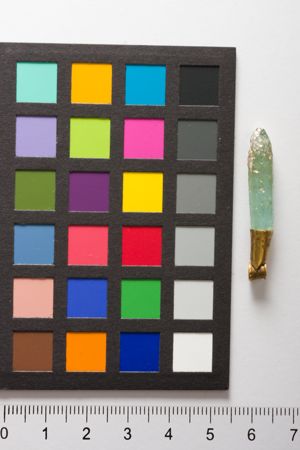
lamina a forma di tronco di cono cavo montato su un elemento in pasta vitrea verde chiaro a forma di guglia con profilo esagonale; l'appiccagnolo, striato e con i bordi leggermente rilevati, è saldato alla base superiore del tronco di cono.

Read everything Read everything lamina a forma di tronco di cono cavo montato su un elemento in pasta vitrea verde chiaro a forma di guglia con profilo esagonale; l'appiccagnolo, striato e con i bordi leggermente rilevati, è saldato alla base superiore del tronco di cono.

Comments

Write a comment

Send