Subjects





The term 'architecture' must be understood as 'the set of changes and alterations introduced on the Earth's surface, in view of human needs, with the exception of only the pure desert'.
In the light of this definition, still assumed to be valid today by most modern architectural texts, it seems legitimate, in principle, to speak of “architecture” also for the Paleolithic, the oldest chronological phase in human history.
However, if we move from the theoretical to the practical level, it must be noted that, as far as the Lower Paleolithic and the Middle Paleolithic are concerned, no architectural traces have been found in Sardinia referring to these periods.
It is plausible to hypothesize that the absence of these traces is due to the perishability of the housing structures built in these chronological phases: simple huts presumably made of perishable material (wood, bone, leather, branches).
Equally difficult to detect are the traces of modest changes in the organization of the interior space or of the entrance produced by the attendance of caves and shelters under the rock.
The documentary situation improved in the Neolithic period: with the birth of agriculture and livestock, architecture was manifested in the proper sense, that is, “the ability to know and shape the inhabited territory”.
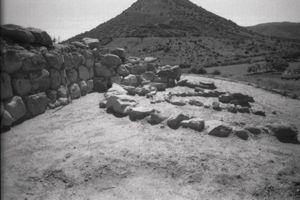
Relative to this period, Sardinia has returned wall structures and “sacks” of huts, as well as funerary structures of various types.
Update
Images


 Facebook
 Twitter
 LinkedIn
 Whatsapp

 Print
Print
 E-mail



Comments