Subjects





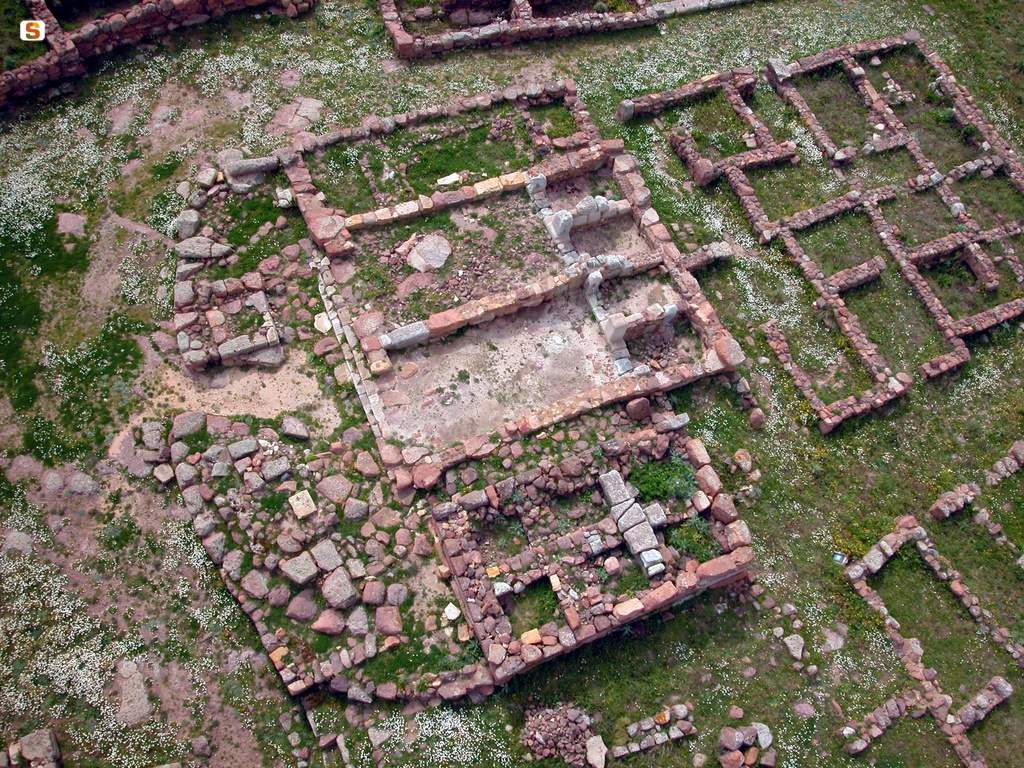
The burial ground is located on the O coast of Sulcis, in the recess of Porto sa Linna (wood port), still used in the early twentieth century for loading wood. In ancient times, the coastline must have been significantly different from the current situation, due to the probable greater incidence of the current swampy areas of Su Stangioni and the Boi Cerbus reservoir.
The necropolis includes eleven Phoenician burials dating back to 770-750 BC. They are located in a territory that shows a certain consistency of Nuragic settlements, while the nearby Phoenician center of Monte Sirai is only 7 km as the crow flies.
The reference town of the small necropolis is currently unknown, but its location in N, in the area of Portovesme, is likely.
The tombs are of the lithic cassette type. The cremated remains of the dead are placed inside commercial amphorae normally used for the maritime transport of foodstuffs. The kit consists of typical jugs coated with red paint, single-angled cups and pots, in some cases even silver jewelry and bronze weapons.
The burials with their related equipment, currently on display in the National Archaeological Museum of Cagliari, are of exceptional interest because they document the incineration of some of the first navigators who arrived and settled on the Sardinian coast, in some cases bringing with them products directly imported from the East: the small burial ground (originally not to exceed 20 units) of a distinct group of Phoenicians, probably aristocrats eager to maintain close kinship and underline a common cultural background, similar to what emerged from research carried out on the coasts of Mediterranean Andalusia.
In fact, the cemetery area of San Giorgio reveals a ritual that seems to link the symbolism of the funeral banquet to the ostentation of a high social rank. This is suggested by the presence of the jewels and weapons found in association with the vessels normally used to transport (amphorae), pour (jugs) and consume (cups) wine.
History of excavations
The necropolis was highlighted in February 1990, during an emergency intervention by the Archaeological Superintendence for the provinces of Cagliari and Oristano.
Bibliography
P. Bernardini, "I Fenici nel Sulcis. La necropoli di S. Giorgio di Portoscuso e l'insediamento del Cronicario di Sant'Antioco", in La ceramica fenicia di Sardegna. Dati, problematiche, confronti. Atti del Primo Congresso Internazionale Sulcitano, a cura di P. Bartoloni-L. Campanella (Sant'Antioco, 19-21 settembre 1997), collana "Collezione di studi fenici, 40, Roma, C.N.R., 2000, pp. 29-62.;
P. Bernardini, "I Fenici nel Sulcis", in Argyróphleps nesos. L'isola dalle vene d'argento: esploratori, mercanti e coloni in Sardegna tra il 14. e il 6. sec. a.C., a cura di P. Bernardini-R. D'Oriano, Fiorano Modenese, Comune di Fiorano Modenese, 2001, pp. 41-46;
P. Bernardini, "I roghi del passaggio, le camere del silenzio: aspetti del rituale funerario nella Sardegna fenicia e punica", in Quaderni del Museo, 1, 2003, pp. 257-292.
How to get there
From Iglesias, reach the SS 130 and continue in the direction of Carbonia. The road crosses the SS 126, which runs up to the height of Bacu Abis, passing Gonnesa. Turn south, along the SP 82 to Portoscuso, and continue, entering the SP 2, to the industrial area of Portovesme. At the height of the ALCOA plant, turn downwards towards the sea, up to the necropolis called “di San Giorgio”.
Content type:
Archaeological complex
Archaeology
Usability: unmanaged site
Province: South Sardinia
Common: Portoscuso
Macro Territorial Area: South Sardinia
POSTAL CODE: 09010
Address: SP 2 - località San Giorgio
Update
Where is it
Texts

Author : Bernardini, Paolo <1950-2018>
Author : Bernardini, Paolo <1950-2018>
Results 2 of 1488964
View All
Video


 Facebook
 Twitter
 LinkedIn
 Whatsapp

 Print
Print
 E-mail


Comments