Subjects





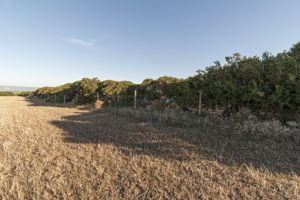
The site is located in the southeastern part of the Gulf of Oristano and is located on a complex of alluvial bumps near the lagoon system formed by the Marceddà, San Giovanni and Santa Maria ponds.
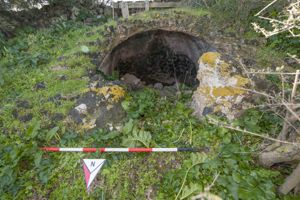
The area where the vestiges of the ancient city of Neapolis are located, frequented since the Neolithic Age, was inhabited continuously from the last stages of the Bronze Age and until the middle of the 8th century, when the Phoenician Emporium was established. An important lagoon/port center, it was attended by oriental people already in a pre-colonial phase, with a probable stable presence of Philistines attested by the discovery of a fictile plastic fragment probably depicting the face of a bearded man, created according to stylistic and formal models attributable to the Syro-Palestinian area and dating back to the XII-XI century BC; according to some scholars, the find is to be attributed to the upper part of a philistine sarcophagus bearing the representation of a funerary mask Maria, whose facial features and the folded hands underneath are schematized according to the usual stylistic features of philistine craftsmanship; according to another theory, the fragment is part of a funerary vase, always attributable to philistine culture. Recent studies have, however, confirmed its funerary value, a fact that implies the safe residence in the center of Neapolis of people of philistine origin, probably included in the Nuragic community given the absence of settlement structures attributable to different cultures. Recent archaeological investigations have revealed that the origins of the city of Neapolis, formerly attributed to the Carthaginian phase, must instead be placed in an earlier era: the conviction that the Phoenicians, as part of their activity of penetrating the territory of the Gulf of Oristano that led them to the founding of Othoca and Tharros, settled on a center already inhabited by an indigenous population, giving it the connotation of a commercial empire. In the current state of knowledge, it is not possible to identify the characteristics of this Phoenician settlement, attested, however, by significant finds of material culture: the stable presence of the Phoenicians in the site is documented by everyday artifacts intended for the canteen, the pantry and the preparation of food, dating back to the VIII-VI centuries BC, and are consistently inserted into the Phoenician colonial context because they highlight contacts with Tyre, Carthage and the Iberian area, as well as an affinity with the island contexts of Tharros, Sulci and Nora), while the isolated discovery of the bucchero and Etruscan amphorae testifies to contacts with southern Etruria in the late Orientalizing period. The Punic phase of Neapolis is certainly better documented: founded at the end of the 6th century BC by the African metropolis of Carthage with the function of a collection and sorting point for agricultural resources coming from Campidano and metals from the Montevecchio area that were then shipped to be marketed, the city is witnessed, in addition to structures identified within the urban circuit dating back to the VI-V century BC, also by numerous imported finds that confirm its vocation commercial center of the town, well integrated into the traffic circuit of the Western Mediterranean, even for the following phases (so much so that the amphorary containers found in the area span a chronological arc that dates back to the 7th and 2nd centuries BC). It is precisely the findings of material culture that circumscribe the function of the various areas of the inhabited center and of the immediately neighboring areas: a stretch of walls dating back to the fourth century BC constitutes a clear physical border in the North-West part; the high presence of amphorae of various origins in the Northern sector characterizes the commercial function of this sector, intended for the arrangement and storage of imported goods; even the North-East sector would seem to have been destined for the same commercial function; the sector to the south, far from the streets of water, it was the place dedicated to the storage of goods to be exported; the suburban spaces in the North-East housed a necropolis with pit tombs dating, based on materials, to the V-IV centuries BC and, in the vicinity, an artisanal sector dating back to the fourth century BC attested by the presence of slag and concotta clay with traces of vitrification that can be connected to a smelting plant; also in the North-East, just beyond the urban limit, a favissa was found containing (in addition to various objects including pinakes, dense fruits, etc.), numerous fictilian figurines (datable to the 4th-3rd century BC), made both by hand and in matrix, depicting suffering devotees, who with their hands indicate, touching them on the body, the headquarters of diseases to invoke healing (oculopathies prevail) and, this extraordinary discovery, would attest to the existence of a place of worship dedicated to a health divinity, confirming religious practices widespread throughout the Punic world.
History of excavations and studies
The area of Neapolis has been known in literature since ancient times: mentioned as a coastal center by Ptolemy (III, 3, 2), which includes the city among the poleis of the western coast of the island of Sardinia; moreover, its identification with the Neapolitanus portus, known from portolani and nautical charts of the thirteenth century, as well as the mention of Domo de Neapolis, referring to a modest rural village mentioned in the documents around the middle, would be unequivocal of the thirteenth century it seems to refer to this context.
The importance of the archaeological context was already evident in the 19th century when Vittorio Angius described the extension of the predominantly commercial settlement and the characteristics of the monumental emergencies.
Archaeological research in the area was started in the middle of the 19th century and resumed in 1951, but they were active in an intense and almost continuous way from the Seventies of the last century until today.
Bibliography
P. Bartoloni, La Sardegna prima dei Fenici: Micenei, Ciprioti e Filistei, in La Sardegna fenicia e punica. Storia e materiali, a cura di M. Gurguis, collana Corpora delle Antichità della Sardegna, Sassari 2017, pp. 39-43;
E. Garau, Neapolis, in La Sardegna fenicia e punica. Storia e materiali, a cura di M. Gurguis, collana Corpora delle Antichità della Sardegna, Sassari 2017, pp. 39-43;
E. Pompianu, Il golfo di Oristano in età fenicia e punica. L'occupazione del territorio attraverso lo studio della cultura materiale, Dottorato di Ricerca "Il Mediterraneo in età classica. Storia e culture", XXI ciclo, Università degli Studi di Sassari, Dipartimento di Storia, 2009;
E. Garau, Anfore d'importazione a Neapolis tra il VII e il IV sec. a.C., in Id., Disegnare paesaggi della Sardegna, Ortacesus, 2007, pp. 35-57;
R. Zucca, Il centro arcaico di Neapolis, in E. Garau, Disegnare paesaggi della Sardegna, Ortacesus 2007, pp. 11-15;
E. Garau, Da Qrthdsht a Neapolis. Trasformazioni dei paesaggi urbano e periurbano dalla fase fenicia alla fase bizantina, Ortacesus 2006;
P. Bernardini, Neapolis e la regione fenicia del golfo di Oristano, in Zucca 2005, pp. 67-123;
E. Garau, Traffici mediterranei a Neapolis (Guspini-Ca) tra il VII il IV secolo a.C., in Bondì S.F., Vallozza M. (a cura di), Greci, Fenici, Romani: interazioni culturali nel Mediterraneo antico, Atti delle Giornate di Studio (Viterbo, 28-29 maggio 2004), Viterbo 2005, pp. 127-138;
B. Sanna, Nuove terrecotte figurate da Neapolis, in "Quaderni della Soprintendenza Archeologica per le province di Cagliari e Oristano", 19 (2002), pp. 181-198;
E. Acquaro, Su un presunto frammento di sarcofago filisteo in Sardegna, in "Studi di Egittologia e Antichità Puniche", 17, 1998, pp. 47-53;
M. Pittau, La Neapolis della Sardegna: emporio punico oppure greco?, in A. Mastino (a cura di), L'Africa romana, Atti del VII convegno di studio (Sassari 15-17 dicembre 1989), Sassari 1990, pp. 557-567.
F. Fanari, L'antico porto di Neapolis-Santa Maria di Nabui-Guspini (CA), in QuadSoprCaOr 6, 1989, pp. 125-138;
S. Moscati, R. Zucca, Le figurine fittili di Neapolis, in "Atti della Accademia Nazionale dei Licei, Memorie", Serie VIII-v. XXXII, 1989;
P. Bartoloni, Un sarcofago antropoide filisteo da Neapolis (Oristano-Sardegna), in "Rivista di Studi Fenici", vol. XXV-1, Roma 1987, pp. 97-103;
R. Zucca, Neapolis e il suo territorio, Oristano 1987, pp. 100, 151-182;
V. Angius, sv. Guspini, in G. Casalis, Dizionario geografico storico-statistico-commerciale degli Stati di S.M. il Re di Sardegna, VIII, Torino, G. Maspero, 1841.
How to get there
Take the SS 130 to the junction for Villasor and take the SS 196 that leads to Guspini. Once in the town, take the SS 126 up to km 94, where you turn towards Sant'Antonio di Santadi. From the fork, go about 15 km and turn off to a road of agrarian penetration. After about 200 m you are in the archaeological area.
Content type:
Archaeological complex
Archaeology
Usability: unmanaged site
Province: South Sardinia
Common: Guspini
Macro Territorial Area: South Sardinia
POSTAL CODE: 09036
Address: SP 65 - località Stagno di Santa Maria
Update
Where is it
Images
Audio


 Facebook
 Twitter
 LinkedIn
 Whatsapp

 Print
Print
 E-mail



Comments