Subjects





*Sebadas* (also known as *seadas*, *seattas*, *sevadas*, *sabadas*, or *casgiulata*, depending on the local name) are among the most widespread and recognizable pastries in Sardinian cuisine. Their origins lie in the agro-pastoral culture of the island's interior, where women of the household prepared them to welcome shepherds returning from transhumance for Christmas or Easter. The etymology of the name remains a subject of debate: leading theories include a derivation from the Latin *sebum* or the Sardinian *seu* (fat or tallow)—referring either to the lard content or the glossy appearance of the fried surface—or from the Spanish *cebada*, which refers to barley but, more broadly, to the act of feeding.
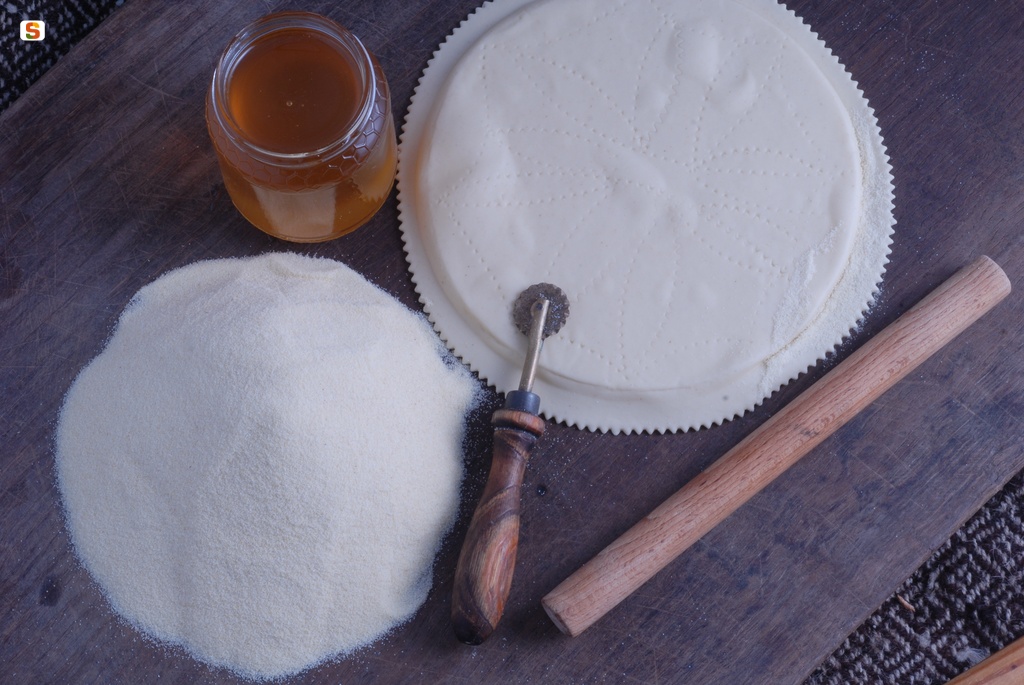
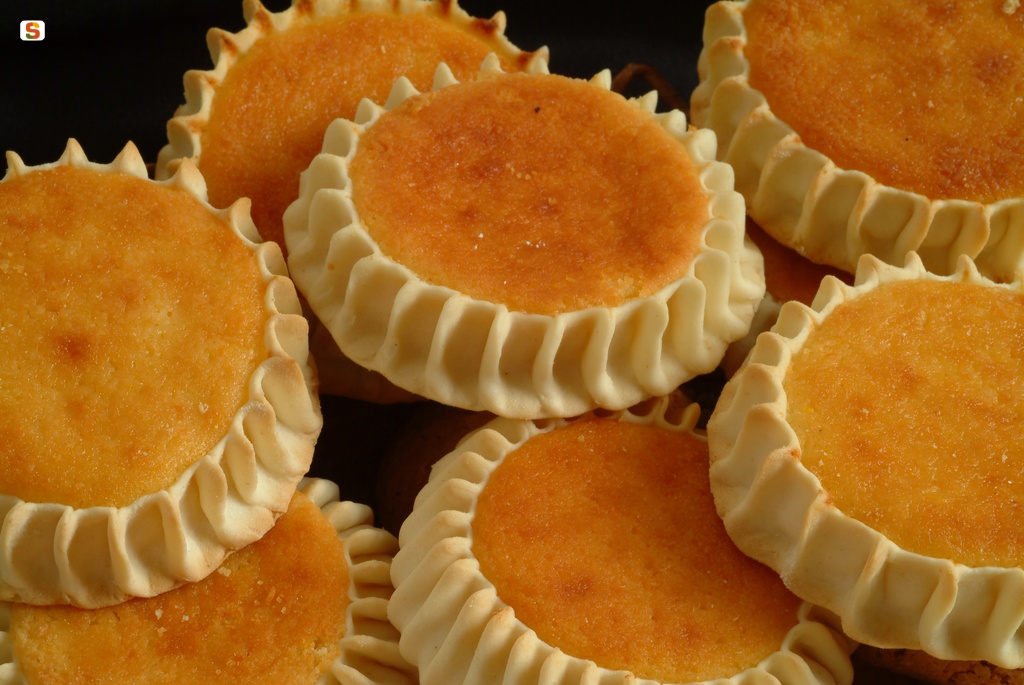
Structurally, they resemble a large, round ravioli made from two thin discs of *violada* dough (durum wheat semolina, water, and lard) enclosing a filling of fresh sheep's milk cheese that has been allowed to sour for one or two days prior to preparation. The cheese's acidity—achieved through natural fermentation—defines the product's flavor profile by contrasting with the honey drizzled over it at the end. The cheese is placed on the first disc along with grated lemon zest and covered by the second disc; the edges are then sealed and trimmed to create a characteristic scalloped pattern. They are fried in oil or lard until evenly golden, leaving the filling stretchy and melted inside. The final touch—honey poured over the still-warm *sebada*—is what transformed the dish into a dessert.
Local variations primarily concern the type of cheese used (in the Campidano region, the use of cow's milk *caciotta* instead of *pecorino* is documented) and the degree of acidification, which is more pronounced in versions from Ogliastra. Today, *sebadas* are an everyday dish, while still retaining their role as a welcoming treat and their connection to family occasions.
Bibliography
S. Spiggia, Le Api nella Tradizione Popolare della Sardegna. Sassari, Carlo Delfino Editore, 1997, pp. 57-64.
Formaggi di Sardegna, a cura di M. Venusti. Cagliari, Agenzia LAORE, 2010.
Dolci in Sardegna. Storia e tradizione. Nuoro, Ilisso, 2011.
G. Marongiu, Mandigos, gustos e licanzas. Selezione di ricette della tradizione orale della Sardegna. Vol. 1, Cagliari, Agenzia LAORE, 2020.
S. Paulis, Dolci in Sardegna. Nuoro, Ilisso, 2024.
Update
Texts

Year : 2011
Year : 2011
Results 2 of 1094228
View All
Video


 Facebook
 Twitter
 LinkedIn
 Whatsapp

 Print
Print
 E-mail
Comments