Subjects





The almost total absence, in the artistic landscape of Giudical Sardinia, of autonomously configured works of sculpture, that is, capable of establishing a relationship with space that separates them from the strict dependence on the architectural structure, is well known.
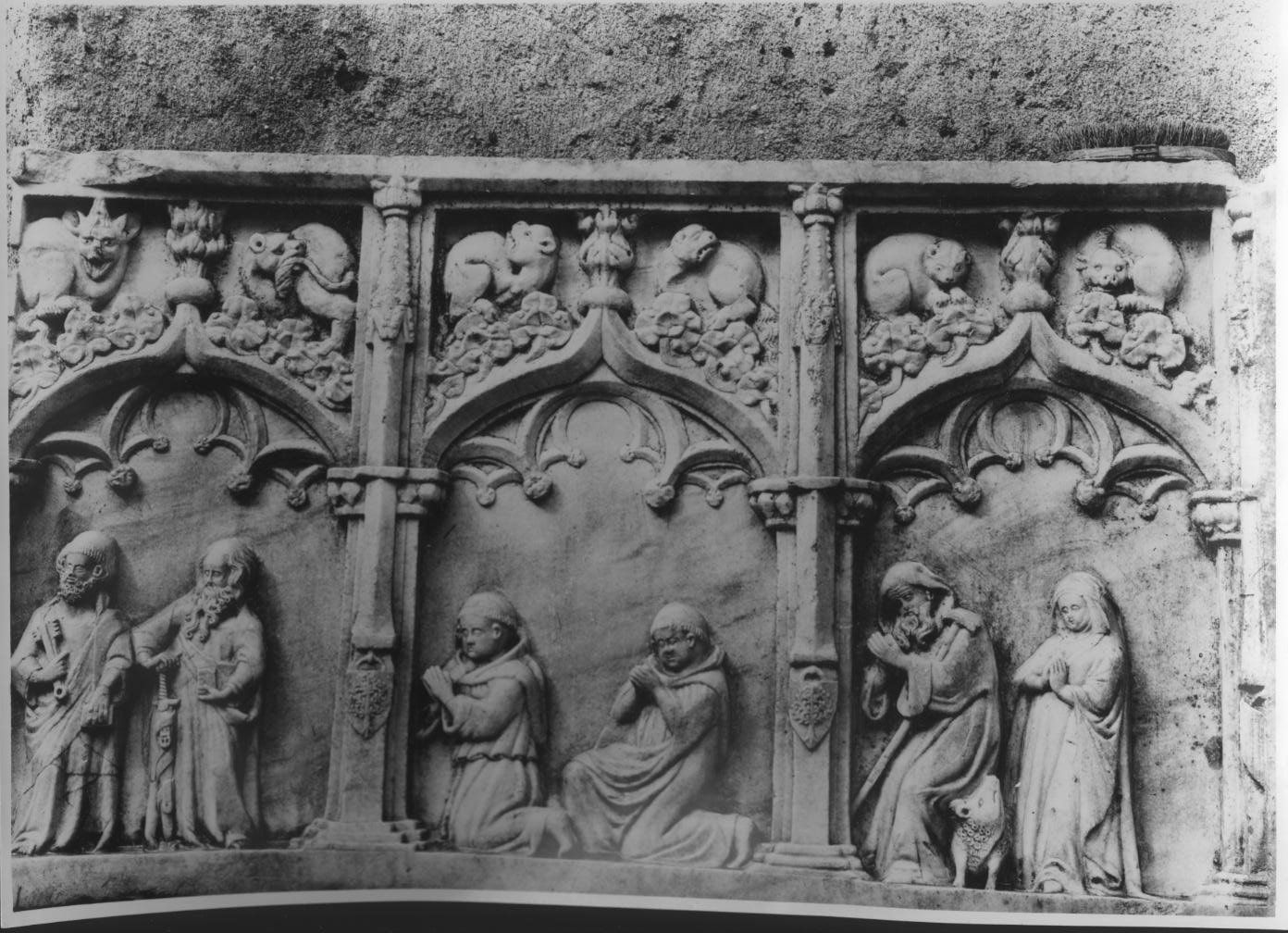
It must be reasonably assumed that there was a sculpture of the apparatus of the lay client - of which nothing, however, has certainly remained referable to the centuries between the eleventh and thirteenth centuries - and that, at least in the most important buildings, the liturgical furniture of the churches included sculptural objects (furniture or immovable by destination) of a category such as to assign to the worship room the function of container of the same, that is, pulpits, holy water fountains, presbyterial fences and so on, of which there are few or no traces that have come down to us materially.
The only artifact of its kind, which reaches a quality level such as to fit into the main developments of European Romanesque sculpture, is the “Guglielmo's Pergamon”, from 1312 in the cathedral of Cagliari but built between 1159 and 1162 for that of Pisa; which is why it is in the evolutionary lines of Tuscan plastic that must be inserted at the same time, not of the Sardinian one.
Like all the marble liturgical furnishing materials, produced or imported to the island between the 5th and 10th centuries in the Late Antique or Byzantine cultural environment, the Romanesque elements of similar functional purpose, in marble, bronze or wood, have come to us for the most part in the state of fragments.
To the hand of sculptors well rooted in the early medieval tradition, but already characterized by a Romanesque mentality, we must refer to two pluteus from the first decades of the 12th century, pertaining to the presbyterial enclosure of the cathedral of Santa Maria in Oristano (“Lions gathering calves” and “Daniel in the lion's den”). Two pluteus (only one is intact) with inlaid wheels, ascribed to a Pisan-Pistoian sculptor from the late 12th and early 13th centuries, belonged to the presbyterial enclosure of the cathedral of Saint Peter of Sorres.
In the category of metal objects often mentioned in medieval Sardinian sources, only two survive, both in bronze: the first is the peacock-shaped aquamanile, coming from the territory of Mores and today in the National Art Gallery of Cagliari, to refer to the Hispano-Moorish production of the eleventh century; the other is the pair of picchiotti from the cathedral of Oristano, with a Leonine prototype and an epigraph that shows the date of 1228 and the names of the creator - Placentinus - and of the clients: the Arborense judge Mariano II by Lacon- Gunale and Archbishop Torgotorio de Muru.
Among the polychrome wooden artifacts, there is a group of five statues (Christ, Madonna, Joseph of Arimathea, John the Evangelist and angel) that make up the “Deposition from the Cross” already in the church of San Pietro del Crocifix and today in the parish church of San Sebastiano a Bulzi, referring to the production of Tuscan-Lazio workshops operating in the first decades of the 13th century.
Update
Images
Video
Audio

Results 2 of 11184
View All


 Facebook
 Twitter
 LinkedIn
 Whatsapp

 Print
Print
 E-mail
Comments