Subjects





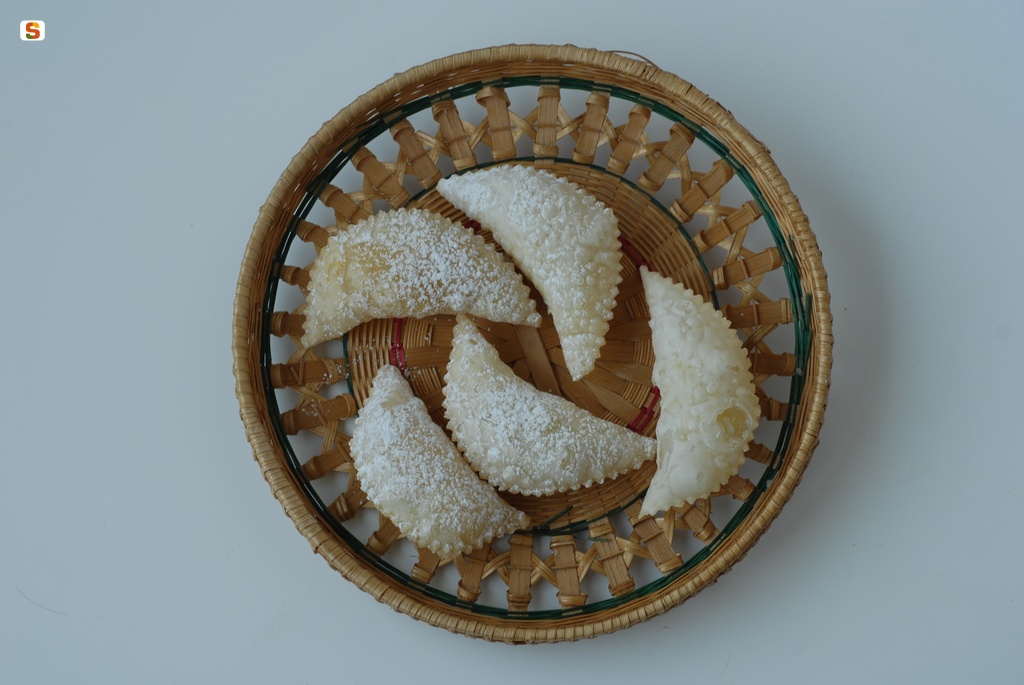
*Is còccias de casu*—also known as *s'azza de casu* in the Sulcis region—are fried sweet ravioli featuring fresh, slightly tangy goat cheese as their main ingredient. This characteristic clearly distinguishes them from the majority of Sardinian ceremonial pastries—which typically center on almonds, honey, and *sapa* (grape must syrup)—and highlights their origins in the goat-herding economy of the Sulcis area. The tradition of making them dates back over a century, and they are officially recognized as a "Traditional Agri-food Product" by the Ministry of Agricultural Policies.
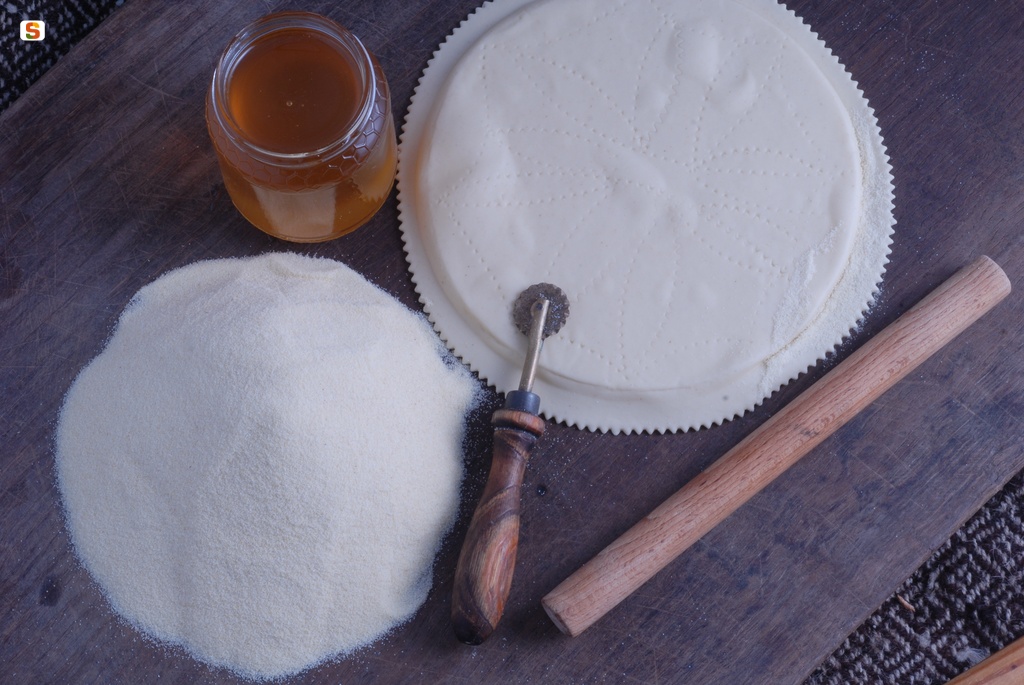
The outer dough, known as *su pillu*, is made from flour, water, and lard (locally called *s'ollu 'e proccu*) and is rolled out until thin and firm. The filling is prepared separately by blending the slightly tangy fresh goat cheese with eggs, sugar, and lemon juice or zest. The contrast between the acidity of the cheese and the sweetness of the sugar defines the product's flavor profile. Once the filling is placed on the dough, the pastries are cut into rectangular or diamond shapes; unlike conventional ravioli, the edges are not hermetically sealed. As the filling expands during frying, it adheres to the dough and stays in place without leaking out. Finally, the *còccias* are coated in granulated or powdered sugar and served warm.
They are produced during the colder months—between the Christmas season and Carnival—when the availability of lard coincides with the supply of fresh goat cheese. The use of frying as a cooking method aligns them with other winter and Carnival pastries found on the island.
Bibliography
Formaggi di Sardegna, a cura di M. Venusti. Cagliari, Agenzia LAORE, 2010.
Dolci in Sardegna. Storia e tradizione. Nuoro, Ilisso, 2011.
G. Marongiu, Mandigos, gustos e licanzas. Selezione di ricette della tradizione orale della Sardegna. Vol. 1, Cagliari, Agenzia LAORE, 2020.
S. Paulis, Dolci in Sardegna. Nuoro, Ilisso, 2024.
Update
Video
Audio


 Facebook
 Twitter
 LinkedIn
 Whatsapp

 Print
Print
 E-mail

![Soufflé dolci e salati : [di verdura, formaggio e frutta]](data:image/png;base64,iVBORw0KGgoAAAANSUhEUgAAAAEAAAABCAQAAAC1HAwCAAAAC0lEQVR42mNkYAAAAAYAAjCB0C8AAAAASUVORK5CYII=)
Comments