Subjects





In the absence of documentary sources, it can be assumed that Sardinia shared only in part the profound political, social and economic crisis, which the Roman Empire experienced starting from the third century AD. In fact, the island does not seem to be involved in the imbalances of varying degrees and nature, affecting other Mediterranean and European lands, while it was soon affected by one of the main factors disintegrating the unity and religious variety of the empire, Christianity.
Even after the Edict of Milan (313), by which Emperor Constantine granted Christians freedom of worship, Bishop Quintasio's participation in the Council of Arles (314) attests to the existence of a diocesan seat in Cagliari, even if it is not possible to ascertain the real size of his Christian community and the impact on the political and cultural fabric of the city.
After 455, Sardinia was occupied by the Vandals, who settled in Mediterranean Africa, but there are no signs, at least in the current state of knowledge, of a real activity of the Germanic element in the historic course of the island, which instead remained within the framework of Western Latin traditions until the moment of its reconquest by the emperor Justinian.
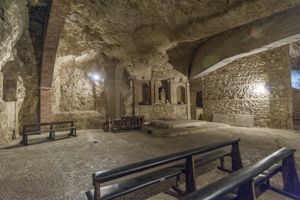
The architectural heritage of Vandalic and Byzantine Sardinia is not abundant, but nonetheless significant for a very important period in the island's history. The military structures, which have mostly been destroyed, are still little known. On the other hand, there are churches, with both a longitudinal and central plan, and baptisteries, whose construction can be located between the 5th and the first half of the 11th century.
Update
Texts

Author : Chilanti, Felice
Year : 1952
Author : Chilanti, Felice
Year : 1952
Results 2 of 1434175
View All
Video


 Facebook
 Twitter
 LinkedIn
 Whatsapp

 Print
Print
 E-mail



Comments