Subjects





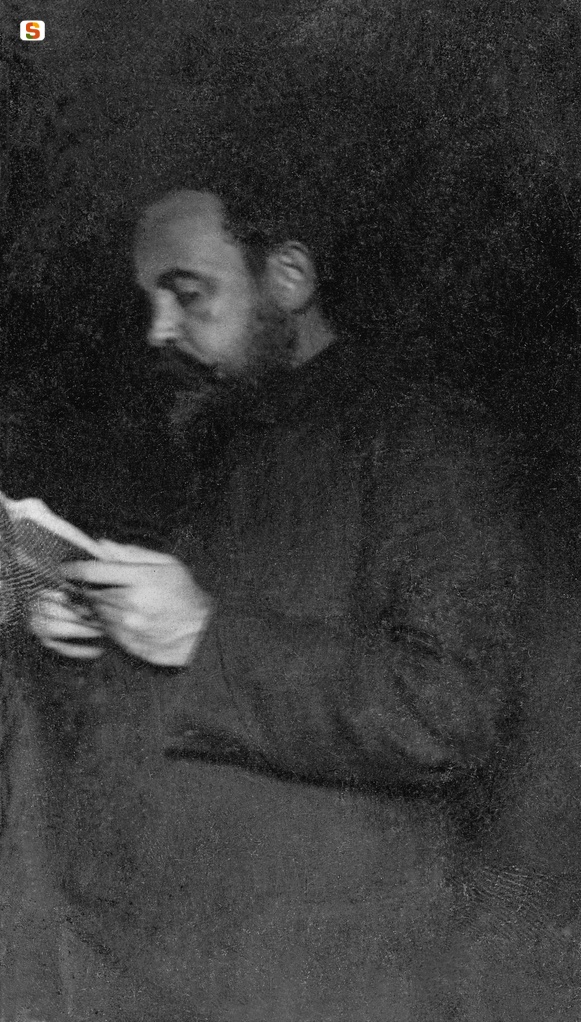
A leading painter, writer, photographer, and teacher, Antonio Ballero (Nuoro, 1864–Sassari, 1932) perfectly embodies the spirit of that generation of Sardinian intellectuals who, in the years following the Unification of Italy, succeeded in projecting the island’s culture into the main national artistic circles. He did so not only by regularly exhibiting his paintings in Milan and in several other cities, but also by travelling frequently to keep up to date, visit exhibitions, and meet friends and colleagues with whom he later maintained an extensive correspondence. An illustrious example is his relationship with the Lombard painter Giuseppe Pellizza (Volpedo, 1868–1907), with whom Ballero also shared a curiosity for the photographic medium.
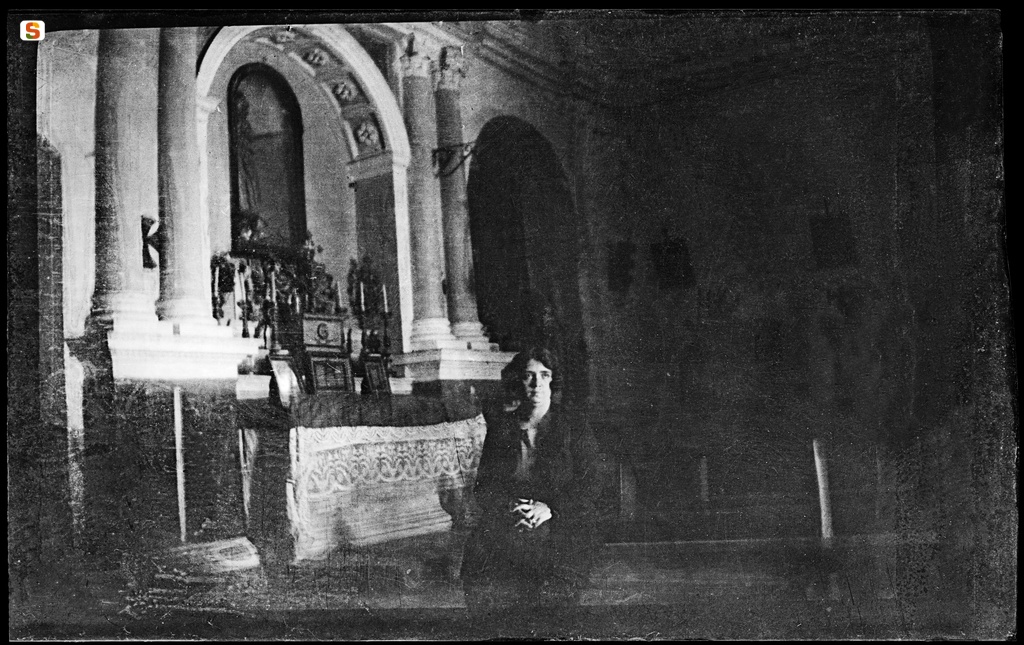
Although he achieved fame as a painter and is still remembered as such, Antonio Ballero devoted himself to photography from his years in Nuoro, when he maintained an affectionate friendship and an always open dialogue with Raffaele Ciceri, pharmacist and photographer, and Sebastiano Satta, writer and photographer. All amateurs, they experimented freely and curiously with the new language. Ballero turned his camera lens toward the everyday life around him, seeking to capture and convey the complex, multifaceted humanity he encountered, from the friends he frequented to those who came to the city occasionally, for trade or other reasons. In his photographs one can recognize the women of Oliena, in traditional dress, bringing produce to the markets of the old Via Majore (today Corso Garibaldi) or to the square now called San Giovanni. Some views are also recognizable, although the city has grown and changed considerably in the century that has passed since the shots were taken. The natural landscape of Monte Ortobene is recurrent; on its summit, in 1901, the great bronze statue of the Redeemer was placed, stimulating among the people of Nuoro a renewed interest in the walk leading to the mountain top. One significant photograph by Ballero, dated 1911, shows an interesting group gathered for an excursion: we see the Spanish painter Bernardo De Quirós, the sculptor Francesco Ciusa, Sebastiano Satta with his son Vindice, and finally Grazia Deledda with her two sons. In other images the setting is rural, and animals and children, traditions and rites of Barbagia Sardinia pass before his photographic gaze.
The Ballero Archive, a personal archive made up of heterogeneous materials preserved by his widow, Ofelia Verzelloni Ballero, has survived to the present day without significant gaps and is now kept by Ilisso in Nuoro. A historical document of undeniable value, the photographic corpus of glass negatives created by Antonio Ballero shows the flow of daily life in Nuoro, Sassari, and their surroundings between the end of the nineteenth century and the first two decades of the twentieth century. Ballero photographed in order to remember, to hold on to faces, images, and moments, but also to look carefully, to arrest compositions of light and shadow of great formal interest.
Bibliography
Miraglia, Modernità della fotografia, in ITALIE 1880-1910. Arte a prova della modernità. Torino, Allemandi, 2000, pp. 69-75.
Antonio Ballero. Nuoro, Ilisso, 2004.
Antonio Ballero. Lo sguardo fotografico del pittore. Nuoro, Ilisso, 2007.
Update


 Facebook
 Twitter
 LinkedIn
 Whatsapp

 Print
Print
 E-mail


Comments