Subjects





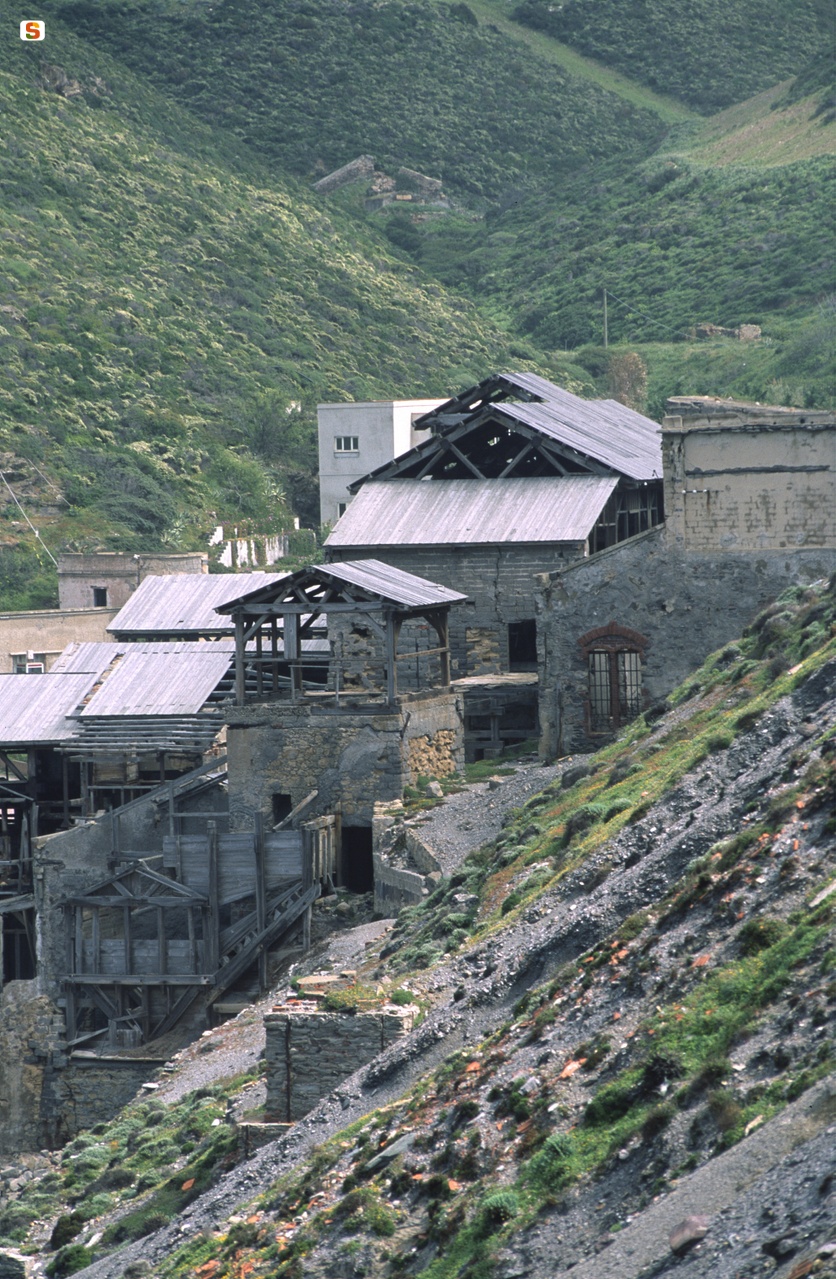
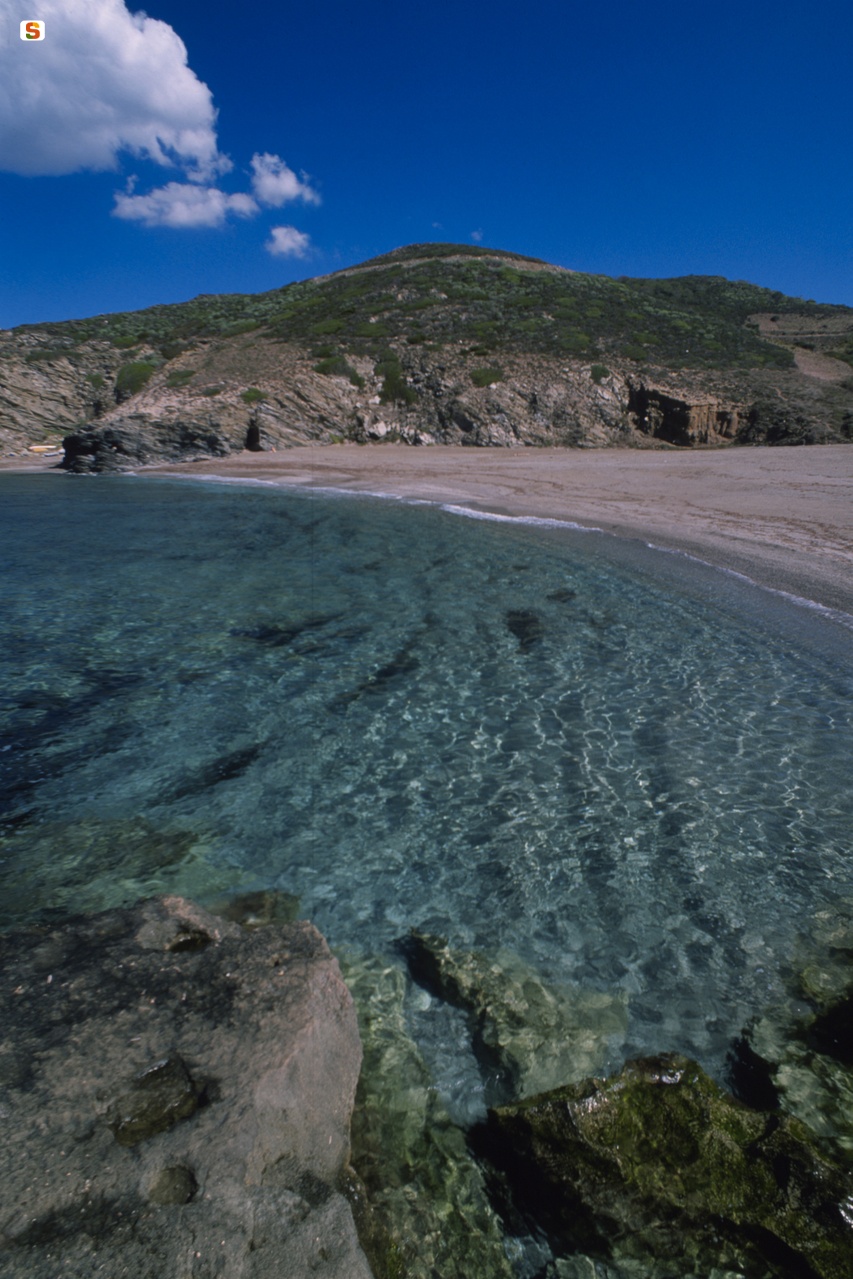
The Argentiera mine is located in a happy position, where two small valleys separated by a hill that dominates the agglomeration in the cove of San Nicolò end. Within the area, the MAR museum - Silver Mine can be used. The mine was affected, in 1838, by an adventurous exploration by the French writer Honoré de Balzac, which ended in an extremely negative way. The mine was taken over in the mid-nineteenth century by a Belgian company, which was succeeded by the Company of Corr'e Boi, which disbanded it in 1963. The luckiest phase of the Silversmith dates back to the 1940s, even with a significant expansion of buildings.
The three main centers of Mineera Vecchia, Plata and Argentiera are close to the sea with an articulated pattern of roads, derived from the level curves of the territory.
The first settlement developed upstream along the sides of the road, while the subsequent nucleus of the laveria and the industrial plants towards the sea favored the creation of an open space, which today appears to have been distorted by questionable interventions: a sort of roundabout with urban furniture completely out of tune with respect to pre-existing ones, derived from a tourist conversion plan, blocked in 1981 by the praetor of Sassari due to irregularities and abuses. Then there are the isolated buildings - the kindergarten, the church, the cinema, the guesthouse - scattered in a large space.
The singularity of the silversmith is the laveria, made with a completely unusual material - pitch-pine wood - to make the structure lighter and easier to replace deteriorated parts. The exterior has a series of volumes aggregated at different levels, while the interior, now abandoned, still preserves degraded mechanical elements.
Some buildings linked to rationalist language are also interesting: the management headquarters reveals updated and functional ways, with geometric volumes on 'pilotis' and long windows, the terrace roof and metal railings. Contrary to usual, the building does not dominate the agglomeration but is sheltered under a ridge parallel to the valley, to avoid prevailing winds. It still preserves the palm trees as a distinctive element of the surrounding greenery.
The church, on the other hand, built in the 1940s at the top of a long staircase, dominates the settlement, while the cinema is located close to the sea.
Even the after-work building is rationally built and adapts to the semicircular pattern of the site where it is located, today heavily altered by tourist restructuring.
Residential buildings, generally with two floors, are variously distributed around the main plants and generally have simple volumes underlined by vancorps, in the case of multi-family homes dating back to the early twentieth century.
The mine is part of the Geominerary, Historical and Environmental Park of Sardinia, recognized by UNESCO.
History of studies
The mine is included in the main works on industrial archeology in Sardinia.
Bibliography
R. Togni, “The Silversmith Mining Complex”, in Industrial Archaeology, 1984, n. 5, October, pp. 5-14; S. Mezzolani-A. Simoncini, Sardinia to Save, Landscapes and Architecture of the Mines, Nuoro, Sardinian Photographic Archive, 1993, pp. 301-310;
F. Masala, “Mining Architectures in Sardinia between Revivals and Eclecticism”, in Man and the Mines in Sardinia, edited by T.K. Kirova, Cagliari, 1993, pp. 115-126;
W. Paris, “The Architecture of the Mining Center of the Silversmith”, in Man and the Mines in Sardinia, edited by T.K. Kirova, Cagliari, 1993, pp. 131-136; Ala, Architecture from the Unification of Italy to the end of the 20th century. Nuoro, Ilisso, 2001, sheet 48
Content type:
Mine
Province: Sassari
Common: Sassari
Macro Territorial Area: Nord Sardegna
POSTAL CODE: 07100
Address: località Argentiera
Telephone: +39 079 2008072
E-mail: cultura@comune.sassari.it
Website: www.mar-argentiera.org
Update
Where is it
Sassari, Miniera dell'Argentiera Images number: 5
Texts

Author : Fenu, Claudia
Author : Fenu, Claudia
Results 2 of 1612271
View All


 Facebook
 Twitter
 LinkedIn
 Whatsapp

 Print
Print
 E-mail
Comments