Subjects





The amphitheater is located in the city area connecting the Castello district and the Sant'Avendrace area.
The term 'amphitheatrum' (amphitheater) designates a particular type of monument, peculiar to the Roman world and culture, intended to host the fights of gladiators (called 'munera') and the hunts for ferocious animals (called 'venationes'). The term seems to explicitly refer to the architectural form of the structure: it would be precisely an 'amphi-theatrum', that is, a double 'theatrum'. The term supplanted, starting from the early imperial age, the oldest of 'spectacula', which literally indicates a set of seats from
which it was possible to watch a show. The oldest attestations of this monumental type seem to date back to the end of the 2nd century BC.
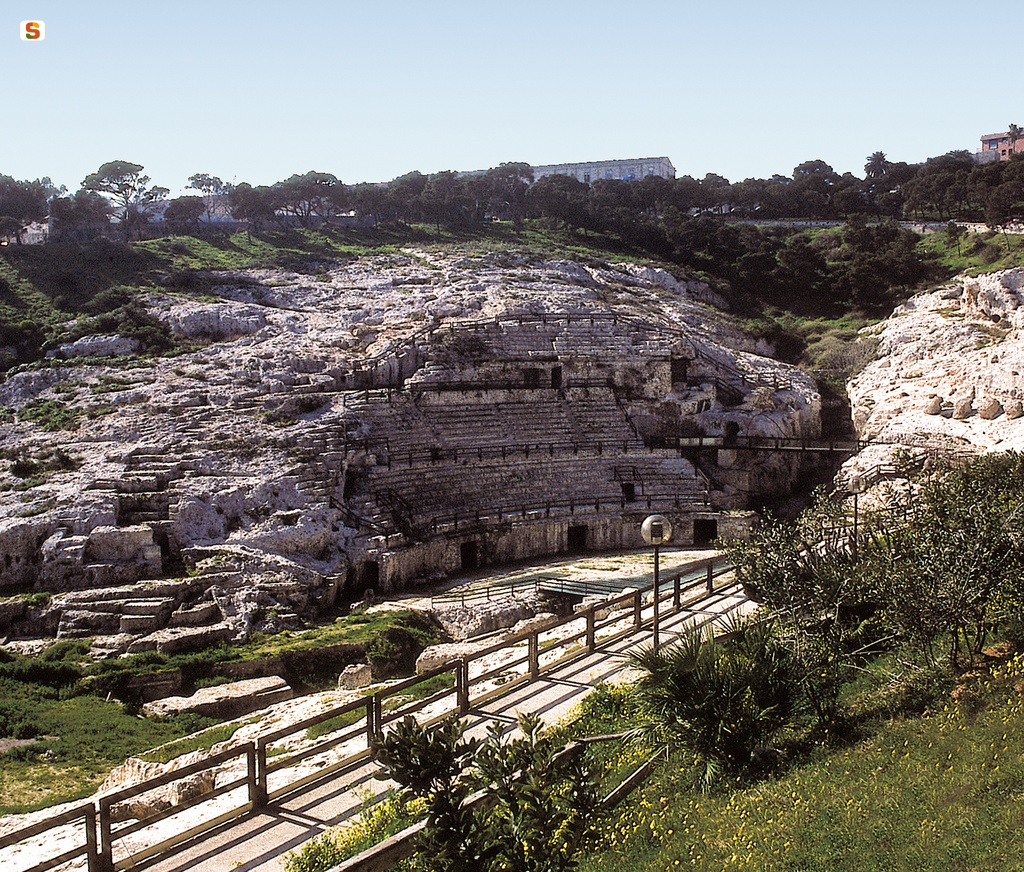
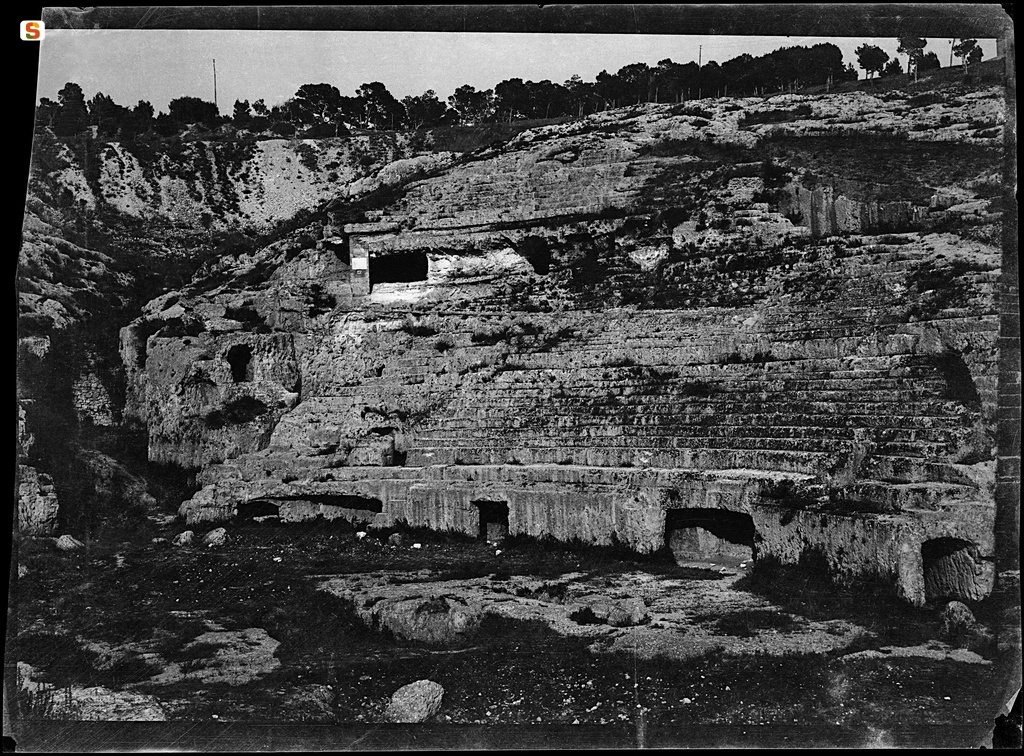
The construction of the Cagliari amphitheater dates back to between the 1st and 2nd centuries AD. Its structure is mostly carved directly into the rock of the hill, both the steps and the underground rooms. For the construction of the remaining building parts, such as the now destroyed S façade, local limestone was used, extracted in blocks. Over the centuries (starting from the Judicial Age), the same area of the amphitheater became a real stone quarry, used both for the recovery of building material already worked and for the extraction of new limestone blocks. The signs of this use of the area are still clearly visible. Systematic despoliation ended around the mid-19th century, when the amphitheater became municipal property.
During the excavation carried out by Spano, numerous marble slabs were found, intended to cover the steps, divided into three different levels, each of which was intended for spectators relevant to a specific social class; access to each level took place through a specific passage. The capacity seems to be around ten thousand spectators. Above the arena was the 'podium', reserved for the most important characters. The social classes of the free (hierarchically divided into 'senators, equites', plebians and serfs) occupied the 'ima, media, summa cavea'. Women and slaves occupied the last covered steps, the gallery.
At the Cagliari amphitheater, there were mainly fights between gladiators and clashes between gladiators and ferocious animals, but it seems that the amphitheater was also intended for the performance of theatrical performances and the execution of capital sentences.
The rainwater that collected on the steps of the amphitheater flowed into the tank through a 96 m long passage that is accessed through an opening dug into the rock ('euripus') on the S side of the arena.
History of the
excavations The first information relating to the amphitheater dates back to the 17th century and is reported in a work by Dionisio Bonfant, actually dedicated to the events of the Sardinian saints. A period of silence followed that was interrupted in 1823 by the captain of the Royal British Navy William Henry Smith, who, in his depiction of the Bay of Cagliari, mentions the existence of ruins of an ancient amphitheater, located near the Capuchin convent. Other news is reported by Abbot Vittorio Angius in 1836, by Valery in 1837 and by General Alberto della Marmora in 1840. However, it was only between 1866 and 1868 that the first excavations took place, conducted by Canon Giovanni Spano. The subsequent excavation, consolidation and restoration work dates back to 1937-38, conducted by the archaeologist Doro Levi.
Bibliography P. Meloni, La Sardegna romana, Sassari, Chiarella, 1992;
S. Angiolillo, L'arte della Sardegna romana, Milano, Jaca Book, 1982;
P. Pala, L'anfiteatro romano di Cagliari, Nuoro, Insula, 2002;
A.M. Colavitti, Cagliari; L'Erma di Bretschneider, Roma, 2003;
A.M. Colavitti-C. Tronchetti, Guida archeologica di Cagliari, collana "Sardegna archeologica. Guide e Itinerari", Sassari, Carlo Delfino, 2003;
A. Mastino, Storia della Sardegna antica, Nuoro, Il Maestrale, 2005;
M. Dadea, L'anfiteatro romano di Cagliari, collana "Sardegna archeologica. Guide e Itinerari", Sassari, Carlo Delfino, 2006;
M. Dadea, "Un graffito paleocristiano con figura di nave a Cagliari", in L'edificio battesimale in Italia. Aspetti e problemi. Atti dell'VIII Congesso Nazionale di Archeologia Cristiana, Bordighera, 2001, I, pp. 155-159.
Structure category: Monument or Monumental Complex
Content type:
Archaeological monument
Archaeology
Usability: Open
Province: Cagliari
Common: Cagliari
Macro Territorial Area: South Sardinia
POSTAL CODE: 09123
Address: via Sant'Ignazio da Laconi, 27
Telephone: +39 070 6777900
E-mail: info.beniculturalicagliari@gmail.com
Website: www.monumenticagliari.it cagliariturismo.comune.cagliari.it/it/vivicagliari/anfiteatro-romano
Facebook: www.facebook.com/monumentidicagliaripaginaufficiale
Instagram: www.instagram.com/monumentidicagliari
October 01 - April 27
Monday - Tuesday - Wednesday - Thursday - Friday - Saturday - Sunday
10:00 AM - 5:00 PM
April 28 - September 30
Monday - Tuesday - Wednesday - Thursday - Friday - Saturday - Sunday
10:00 AM - 1:00 PM
Monday - Tuesday - Wednesday - Thursday - Friday - Saturday - Sunday
3:00 PM - 7:00 PM
Information on tickets and access: The Roman Amphitheater is easily accessible by urban CTM public transport in Cagliari, using lines no. 8, n. 10. The ticket office closes half an hour before closing time.
Access mode: For a fee
Tickets :
Services information: People with disabilities have easy access thanks to a natural slide (in concrete) built at the height of the road. The same slide is transformed into a sort of walkway, comfortable and safe, for the duration of the visit.
Update
Services
 Guided tours
 Facilitated physical accessibility for visitors with specific needs
Where is it
Images
Texts
Video


 Facebook
 Twitter
 LinkedIn
 Whatsapp

 Print
Print
 E-mail


Comments