Subjects





Fiore Sardo is considered the oldest of the island’s cheeses; its artisanal production methods were described as early as the 4th century AD by the Latin agronomist Palladius Rutilius Taurus Aemilianus. A quintessential sheep’s milk cheese from Sardinia’s interior, it is produced throughout the Barbagia region.
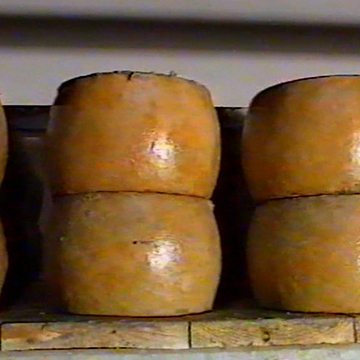
It is a hard, uncooked cheese made exclusively from fresh, raw whole milk from Sardinian-breed sheep, coagulated using lamb or kid rennet paste. The wheels, shaped by hand using specific molds, feature a distinctive "mule-back" (convex) side profile. After being marked at the source and soaked in brine, they undergo light smoking and are then aged in cool environments, such as cellars.
The rind ranges from deep yellow to dark brown, while the paste varies from white to straw yellow. The flavor is bold and becomes increasingly piquant with age: it is an excellent table cheese when young and a superb grating cheese when fully matured.
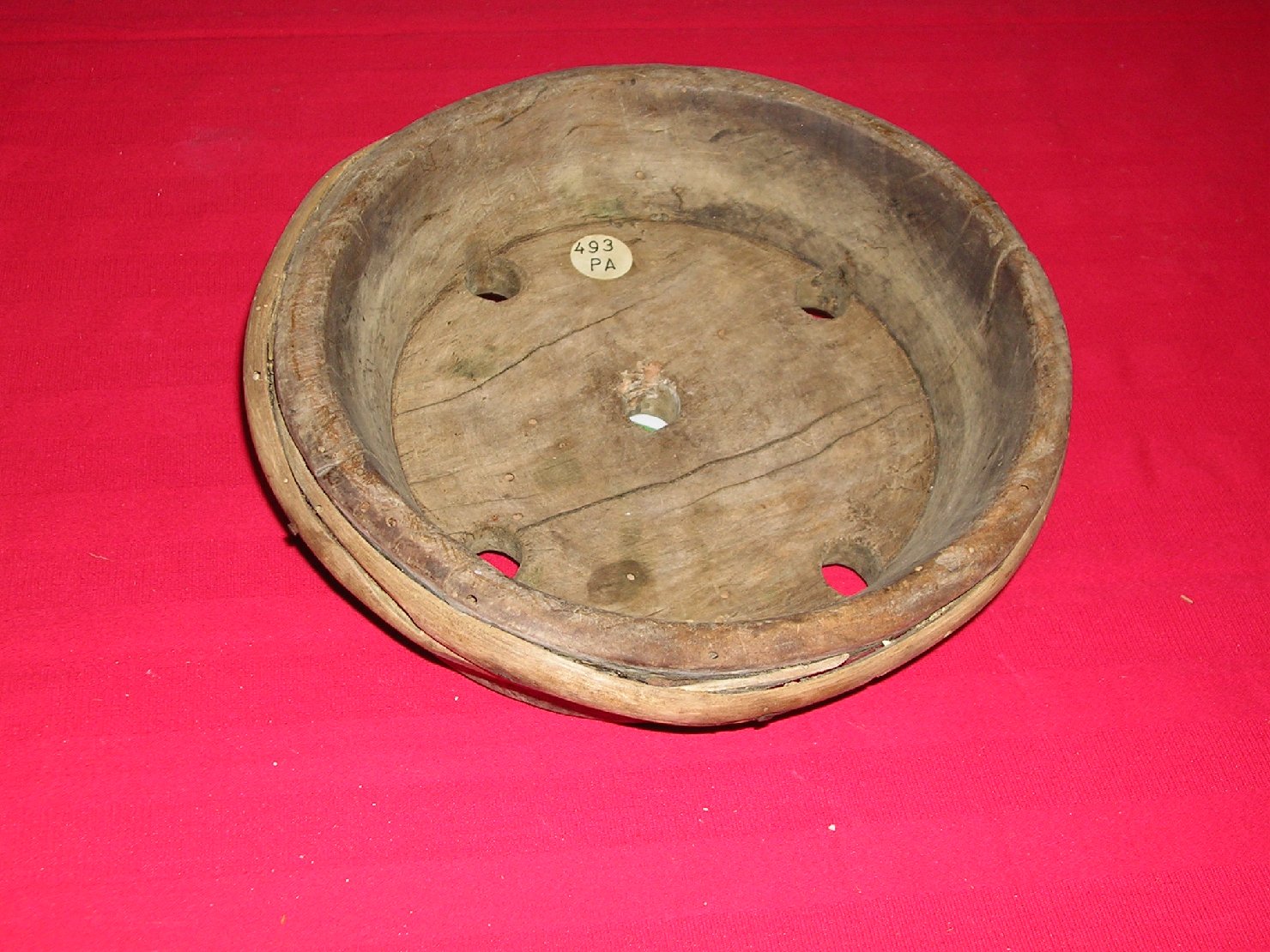
Its name derives from the ancient chestnut-wood molds used in its production; a flower—often accompanied by the producer's initials—was carved into the bottom of the mold, leaving an imprint on the faces of the cheese wheels. Cited in the 1951 Stresa Convention and recognized as a *Denominazione Tipica* (Typical Designation) in 1955 and a *Denominazione d’Origine* (Designation of Origin) in 1974, Fiore Sardo was awarded Protected Designation of Origin (PDO) status in 1996 (EC Reg. No. 1107/96); it is protected by a Consortium based in Gavoi and by a Slow Food Presidium.
Bibliography
Formaggi di Sardegna, a cura di M. Venusti. Regione Autonoma della Sardegna – Agenzia Laore, 2010, p. 15.
Formaggio e pastoralismo in Sardegna. Storia, cultura, tradizione e innovazione. Nuoro, Ilisso, 2015.
A. Guigoni, Il formaggio nei presidi Slow Food: marchi di qualità, in Formaggio e pastoralismo in Sardegna. Storia, cultura, tradizione e innovazione. Nuoro, Ilisso, 2015, pp. 653-664.
G. Murru Corriga, Dall’ovile al museo. Tecniche e strumenti della caseificazione tradizionale in Sardegna, in Formaggio e pastoralismo in Sardegna. Storia, cultura, tradizione e innovazione. Nuoro, Ilisso, 2015, pp. 665-692.
A. Pirisi, I formaggi tradizionali e a Denominazione di Origine Protetta, in Formaggio e pastoralismo in Sardegna. Storia, cultura, tradizione e innovazione. Nuoro, Ilisso, 2015, pp. 199-262.
P.G. Spanu, Dall’età fenicio-punica all’Alto Medioevo, in Formaggio e pastoralismo in Sardegna. Storia, cultura, tradizione e innovazione. Nuoro, Ilisso, 2015, pp. 29-40.
Regione Autonoma della Sardegna, Elenco dei Prodotti Agroalimentari Tradizionali (PAT), 2025.
Update
Video


 Facebook
 Twitter
 LinkedIn
 Whatsapp

 Print
Print
 E-mail


Comments