Subjects





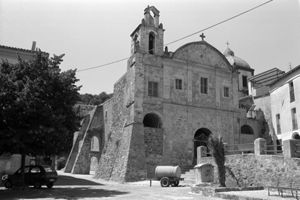
The church and convent are located within the historic walls of the city.
The Capuchins arrived in the city of Sassari from the Royal Convent of Madrid in 1670. They settled in the houses adjacent to the church of San Salvatore (now disappeared), donated to them by the doctor Salvatore della Croce, who had built the church at his expense. The founding of the convent, however, did not follow their arrival in the short term, since the authorization for the foundation was granted by the magistrate of Cagliari only in 1690, while the confirmation by the Cagliari archbishop came the following year. In the meantime, the nuns received numerous donations that allowed them to build the convent and to rebuild the church. Among the benefactors, in addition to illustrious figures such as the Inquisitor General and the Sovereign Philip IV, was also the priest Don Giovanni Tola, mayor of the convent, who contributed, in addition to the reconstruction of the church, dedicated to Jesus, Joseph and Mary and consecrated in the autumn of 1692, also to the creation of the antiportico façade, completed in 1695, a year after his death.
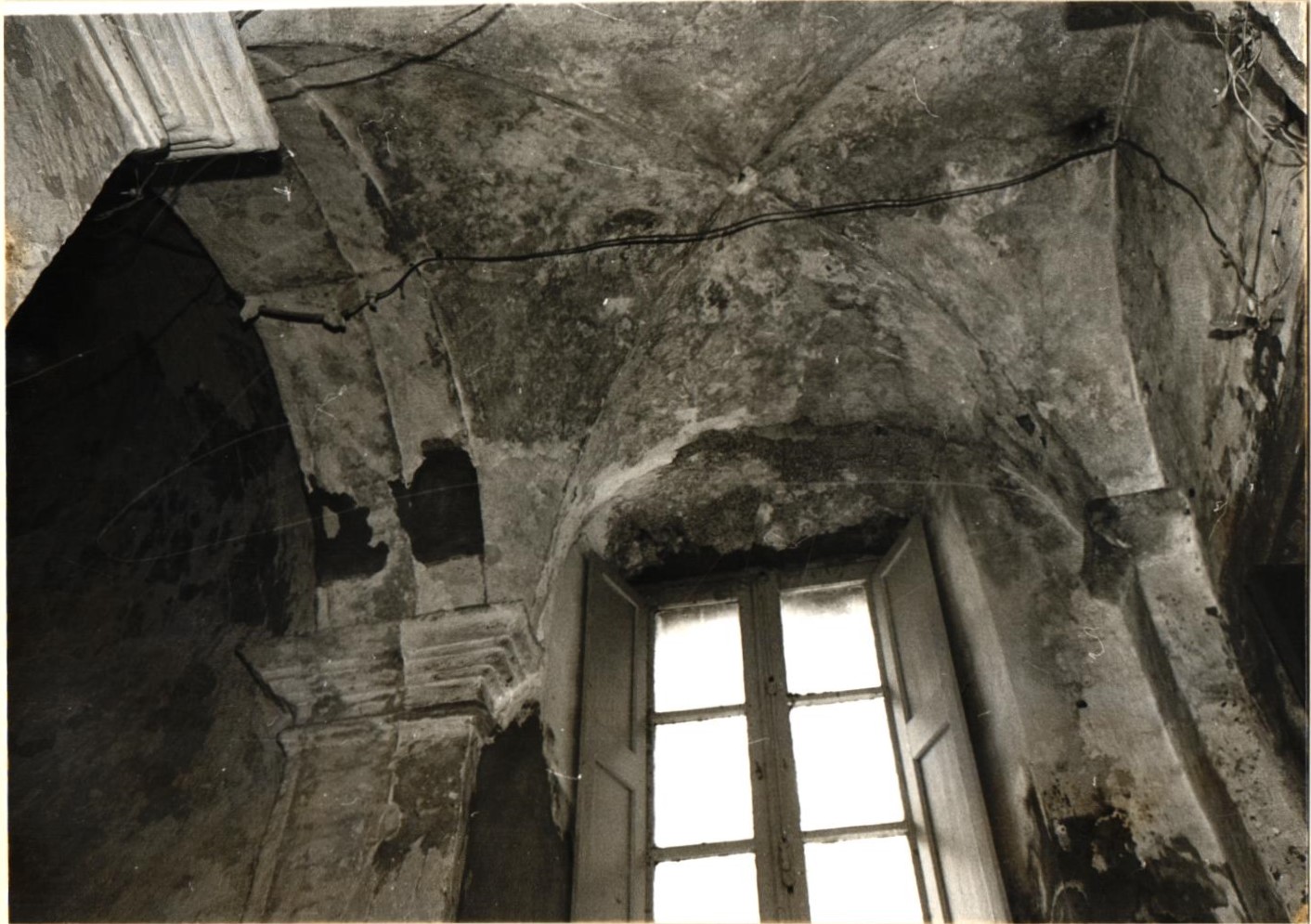
The church is preceded by a quadrangular atrium covered by a barrel vault on a molded frame, inspired by the model provided by the church of San Pietro di Silki. The classroom has a single aisle divided into three bays by Doric pilasters on a molded base. Above the projecting molded frame classically decorated with a triglyph band at the bottom and a frieze with denticles above, the bezel barrel vault is set up, illuminated by small quadrangular windows that find space in the lunettes. In the third and last span, two symmetrical chapels open, slightly protruding from the aisle, which can be accessed through a round arch adorned with a rosette in each sail. The apse chapel, of the same width and height as the room, has a quadrangular plan and a barrel vault, and receives light from two oculi at the top of the end wall.
The flatness of the façade, completely devoid of ornamentation with the exception of Don Giovanni Tola's marble coat of arms, is just interrupted by the curved and arched portal and by the three quadrangular windows - the main central and the side windows buffered - above it.
According to the canons of Spanish tradition, the convent and the church form a single front.
The monastic complex consists of two quadrangular bodies with two internal courtyards and a smaller one, which flanks the church on the left. The oldest part is represented by the building that protrudes beyond the apse of the church. The cloister has preserved its original forms, with the porch consisting of round arches slightly lowered on square Doric pillars with narrow shelves and, on the upper floor, a quadrangular window corresponding to each arch; in the center there is an eighteenth-century well.
History of studies
The church is mentioned by Enrico Costa (1937). After Marisa Porcu's study on the architectural history of Sassari (1996), she is quoted by Aldo Sari in the volume dedicated to the archdiocese of Turritana (2003).
Bibliography
E. Costa, Sassari, Sassari, 1937;
V. Mossa, Architectures Sassari, Gallizzi, 1965; M. Porcu Gaias, Sassari. Architectural and urban history from its origins to the 17th century, Nuoro, Ilisso, 1996;
A. Sari, The Church in the Archdiocese of Sassari, series “Churches and Sacred Art in Sardinia”, Sestu, Zonza, 2003.
Content type:
Religious architecture
Province: Sassari
Common: Sassari
Macro Territorial Area: Nord Sardegna
POSTAL CODE: 07100
Address: largo Monache Cappuccine, s.n.c.
Update
Where is it
Texts

Author : Testa, Alberto
Author : Testa, Alberto
Results 2 of 1599945
View All


 Facebook
 Twitter
 LinkedIn
 Whatsapp

 Print
Print
 E-mail
Comments