Subjects





The territory of Ittireddu has returned archaeological traces that attest to the continuity of settlement starting from the recent Neolithic period. The toponym Ithir is documented in the papers of the “Condaghe di San Pietro di Silki” (11th-13th century). The church of Santa Croce has early medieval origins.
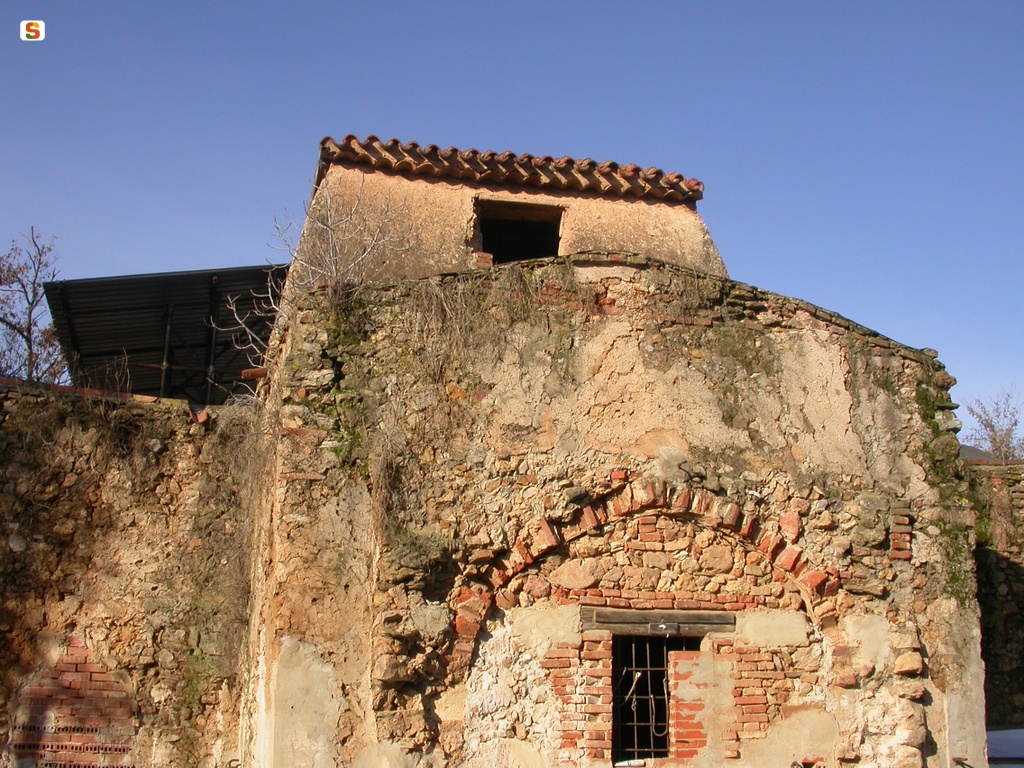
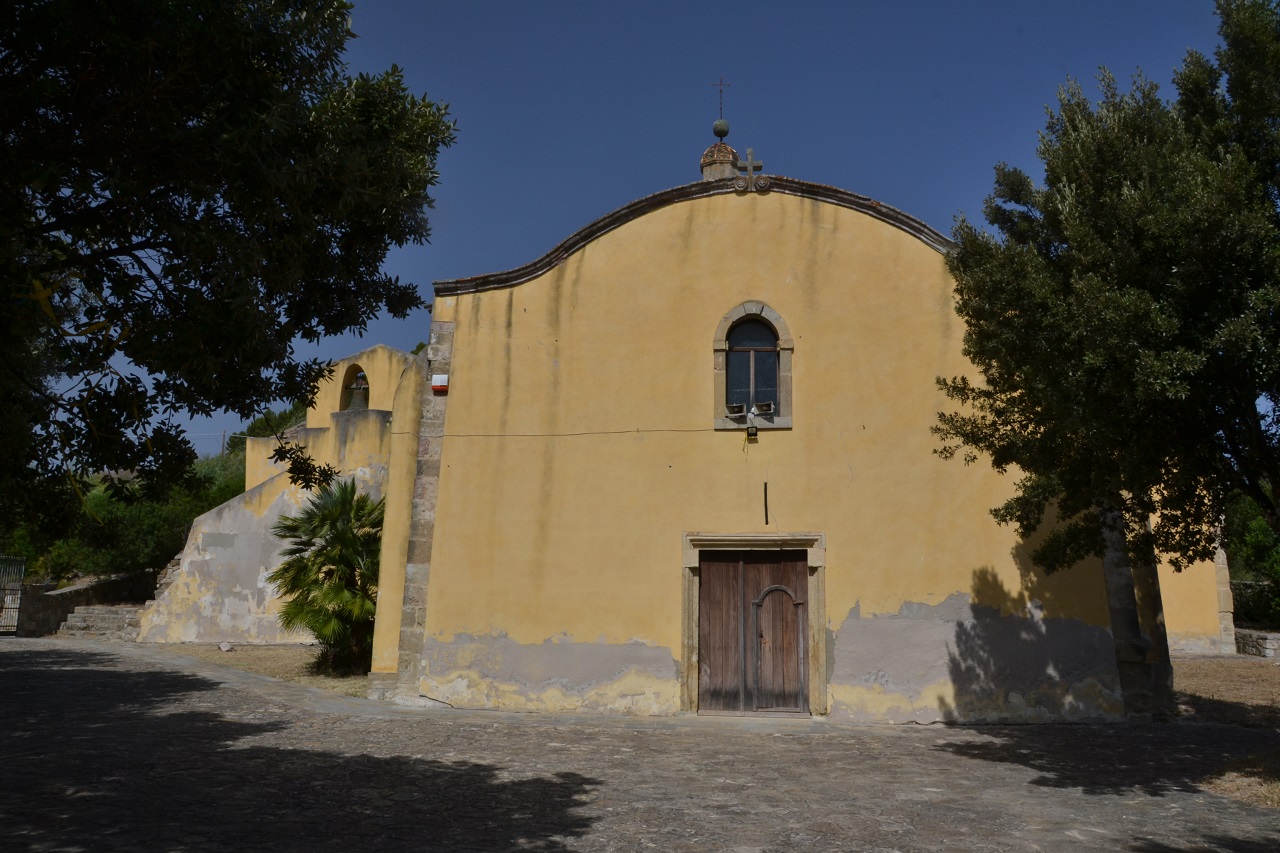
The church of Santa Croce is a beautiful building of Byzantine architecture in Sardinia, characterized by an extension that involved the construction of a sober Romanesque façade. In fact, it has two building phases: the first is that of planting between the 9th and 11th centuries; the second relates to the expansion in the first half of the 13th century.
The plan is shaped like a Latin cross, consisting of a main aisle on which a smaller transept is inserted perpendicularly at two-thirds of the length. On the opposite side of the façade, the church has three apses, the largest in line with the main aisle, two smaller ones along the side of the transept. The church is barrel-vaulted, while at the intersection between the nave and the transept rises a tiburium, a quadrangular structure similar to a rectangular die covered by a sloping roof.
In the small façade, the portal opens with an arched ribbon set on capitals shaped in dark basalt, which, also used for the rib and in a row on the façade, determines accents of bichrome definition. In line with the portal at the top of the façade, the sailing bell tower rises. Inside the church, at the intersection between the nave and the transept, you can see how the tiburium hides not a dome but a barrel vault, positioned lengthwise with respect to the roof of the main aisle.
History of studies
The church was the subject, at the end of the 20th century, of various studies aimed at understanding the unusual coexistence of architectural elements of different origins. Starting in 1986, the contributions of Roberto Caprara and the profile of Margherita Coppola are worth mentioning.
Bibliography by
R. Caprara, “Late Antiquity and the Middle Ages”, in The Sanna Museum in Sassari, Cinisello Balsamo, Amilcare Pizzi, 1986, pp. 169-184; R. Caprara, “The Early Medieval Age in the Territory of the Logudoro Meilogu”, in Il Nuraghe Santu Antine in Logudoro Meilogu, Rome, 1988, pp. 397-432; R. Coroneo, Romanesque Architecture from the Mid Thousand to the Early '300, Nuoro, Ilisso, 1993, sheet 118;
R. Coroneo, Romanesque Architecture from the Mid Thousand to the Early 1300s, Nuoro, Ilisso, 1993, sheet 118; R. Coroneo, Romanesque Architecture from the mid-thousand to the early 1900s, Nuoro, Ilisso, 1993, sheet 118; R. Coroneo, Romanesque Architecture from the mid-thousand to the early 1900s, Nuoro, Ilisso, 1993, sheet 118; R. Coroneo, Romanesque Architecture from the mid-thousand to the early 1900s Oneo-M.
Coppola, Byzantine Cruciform Churches of Sardinia, Cagliari, 1999, pp. 53-54;
R. Coroneo, Romanesque Churches of Sardinia. Tourist-cultural itineraries, Cagliari, AV, 2005, pp. 53.
How to
get there Leave the SS 131 near Giave, to take the SS 128 bis. After passing the town of Mores, continue in the direction of Ozieri and find the junction for Ittireddu on the d. The church dedicated to the Holy Cross is in the town.
Content type:
Religious architecture
Province: Sassari
Common: Ittireddu
Macro Territorial Area: Nord Sardegna
POSTAL CODE: 07010
Address: via Santa Croce, s.n.c.
Update
Where is it
Ittireddu, Chiesa di Santa Croce Images number: 1
Images
Results 2 of 101184
View All
Texts
Video
Audio


 Facebook
 Twitter
 LinkedIn
 Whatsapp

 Print
Print
 E-mail


Comments