Subjects





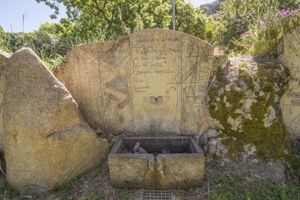
A particularly significant diffusion was the work of Melchiorre Murenu, the aedo by Macomer (1803-1854), which sprang directly from the rich world of “a bolu” poetry, that is, the popular oral and improvised one.
He became blind and orphaned at an early age and led a life of hardship. Illiterate but with an exceptional memory, he was able to learn notions and culture simply by attending church. He became an improvising poet at village festivals, adopting the popular forms of poet-singers and expressing his strong love for his native land with dramatic accents. Murenu's strength lay in being able, on the basis of a strict traditional metric coding, to sing themes close to the people's feelings. He was not afraid to address issues of a social and political nature, which at that time were not available to everyone. Controversial and moralistic, he lashed out against freedom of morals (“To a libertine young woman”, “Sa muzere brincagiola”), poverty (“Sa Poverdade”), social ills (“S'Istadu de Sardigna”, “Sas isporchizias de Bosa”), earning the nickname “Homer of the Poor”. His quarter of a complaint about land raids on the occasion of the law on closures is very famous. Murenu is still one of the most popular poets “in limba” on the island. He died in 1854, apparently after falling off a cliff, in the countryside of Bosa. Legend has it that it was about revenge following the composition of poems that were not exactly about the town on the banks of the Temo
Update


 Facebook
 Twitter
 LinkedIn
 Whatsapp

 Print
Print
 E-mail


Comments