Subjects





The Museum is housed in the spaces of Palazzo Aymerich, the last residence of the Marquises of Laconi designed in the mid-nineteenth century by the architect Gaetano Cima and recently included in the group of 50 valuable houses in Sardinia.
The main body of the building, today a multipurpose center, is spread over 3 floors, and is characterized by the main façade, in typical neoclassical style, punctuated by windows and elegant balconies. Inside, in the “piano nobile” originally intended as a representative environment, precious vintage wallpapers and “papiers peints”, made by the prestigious French printing company Dufour, are still visible.
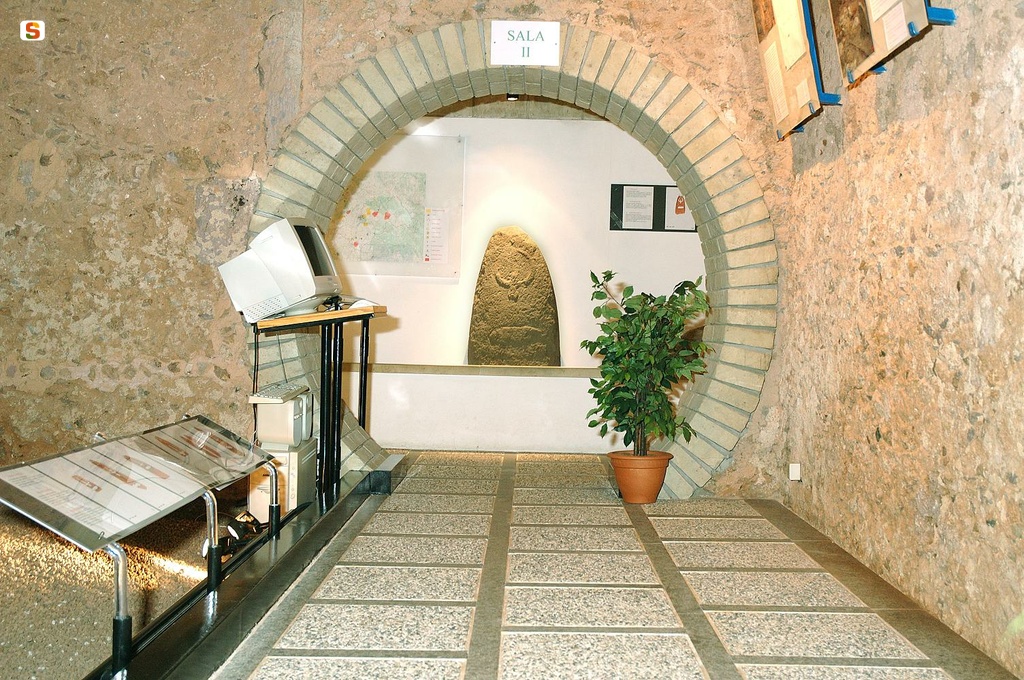
The exhibition itinerary, currently divided into 11 rooms distributed between the ground floor and the second floor, outlines the chronological and typological development of the great prehistoric Sardinian anthropomorphic statuary, using mainly evidence from the territory of Laconi.
Ten rooms are intended for menhirs found in various areas of central-southern Sardinia (areas of Sarcidano, Grighine and Mandrolisai), the eleventh, “the gallery” overlooking the large internal courtyard, instead houses finds of material culture from archaeological excavations of megalithic Sarcidanese funerary contexts (ceramics, metal elements, stone and terracotta tools).
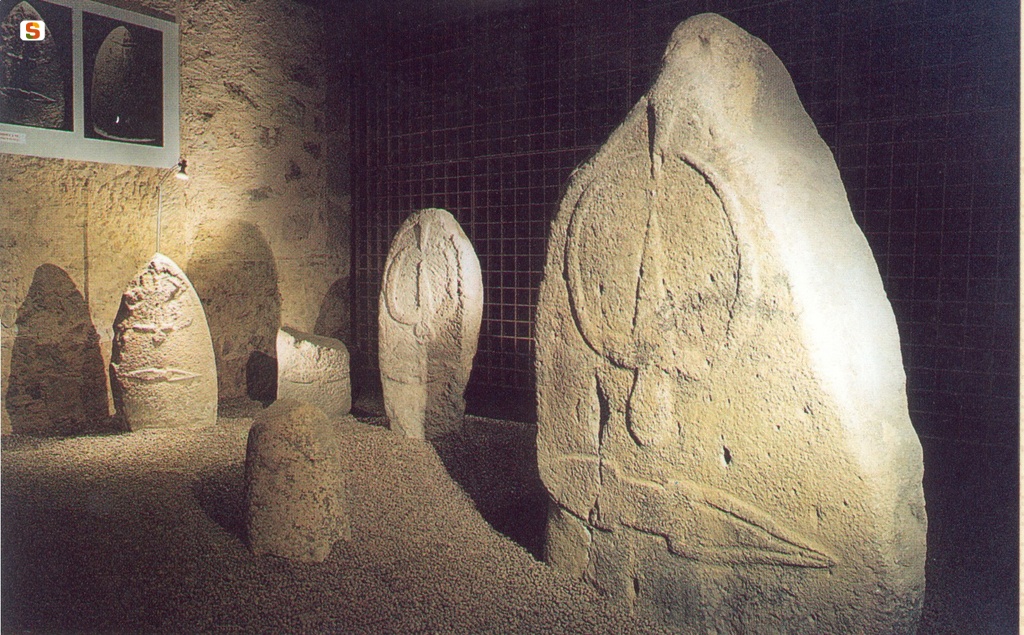
The menhirs present can be basically traced back to three reference classes: protoanthropomorphic menhirs with an ogival shape but devoid of depictions, asexual anthropomorphic menhirs, which show the first somatic features of the face (nose and eyes), and finally real statue-menhirs, a clear evolution of asexual anthropomorphic menhirs, richer in details and symbols that also allow them to be distinguished between the sexes.
Among the monoliths on display, the 36 laconese pieces, carved in local trachyte, (a real prehistoric quarry has been identified in the town of Mind'e Putzu), stand out for their unique volumes and for their iconographic expressions, with the multiple types of “inverted” and the daggers that characterize the male statues.
The other examples under construction, returned from the territories of Samugheo, Allai and Villa S. Antonio, (soon to be followed by Isili, Nurallao and Senis), stand out for their iconographic symbology that is clearly different from that expressed by the menhirs of the Sarcidanese area.
Why it's important to visit it
The museum, unique of its kind in Sardinia, combines scientific interest with the charm of the exhibition, which brings us back to the symbols and figurative experiences of the Sardinian culture of the Early Metal Age. In addition, the suggestion of the Aymerich Palace, an elegant example of neoclassical architecture, is added.
Structure category: museum, gallery and/or collection
Content type:
Archaeology
Usability: Open
Province: Oristano
Common: Laconi
Macro Territorial Area: Central Sardinia
POSTAL CODE: 08034
Address: piazza Marconi, 10
Telephone: +39 342 3507760 +39 0782 693238
E-mail: menhirlaconi@gmail.com
Website: www.menhirmuseum.it
Facebook: it-it.facebook.com/MenhirMuseum
Instagram: www.instagram.com/menhirmuseum/
October - Maggio
Tuesday - Wednesday - Thursday - Friday - Saturday - Sunday
10:00 AM - 1:00 PM
Tuesday - Wednesday - Thursday - Friday - Saturday - Sunday
3:00 PM - 6:00 PM
June - September
Tuesday - Wednesday - Thursday - Friday - Saturday - Sunday
10:00 AM - 1:00 PM
Tuesday - Wednesday - Thursday - Friday - Saturday - Sunday
3:30 PM - 7:00 PM
Information on tickets and access: Agreements for organized groups are possible upon reservation.
Access mode: For a fee
Tickets :
Services information: Guided tours are included in the ticket price.
Update
Services
 Bookshop
 Guided tours
Where is it
Laconi, Museo della Statuaria Preistorica in Sardegna Images number: 8
Images
Texts

Author : Aymerich, Ignazio
Year : 1860
Author : Aymerich, Ignazio
Year : 1868
Results 2 of 1419094
View All
Video
Audio


 Facebook
 Twitter
 LinkedIn
 Whatsapp

 Print
Print
 E-mail

Comments