Subjects





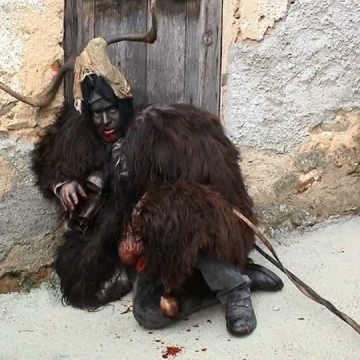
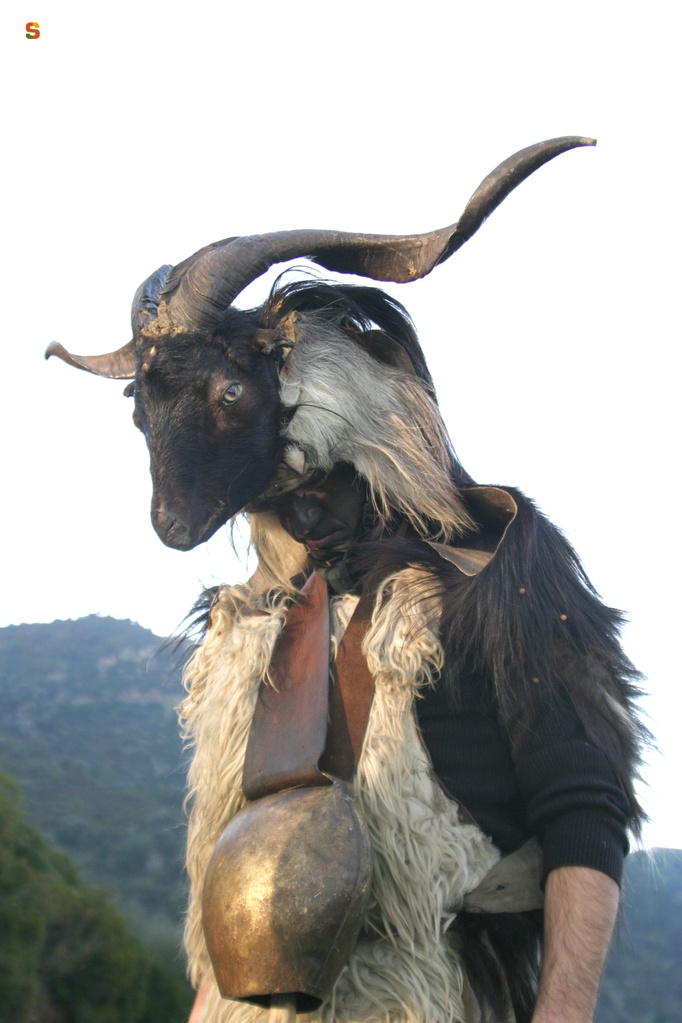
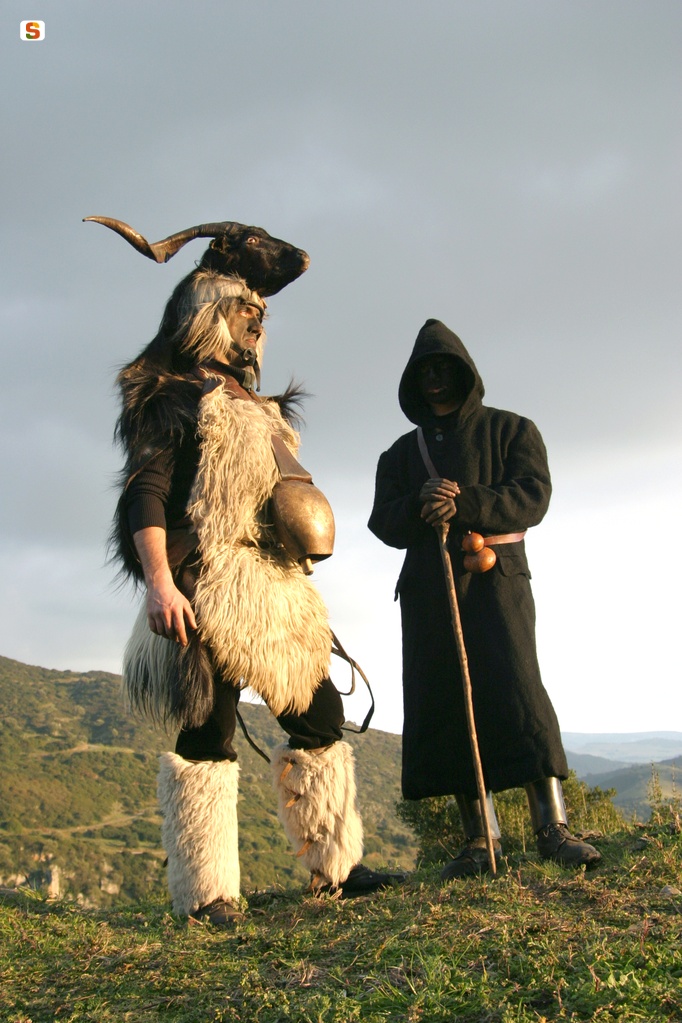
The main protagonists of the Samugheo carnival are different masks. On Mamutzone, a silent mask with a face blackened by burnt cork that, over a black moleskin dress, wears a sleeveless goatskin shirt with a belt hanging from which several rows of rattles hang, on her chest she wears brass and bronze cowbells whose number in ancient times matched the number of sheep owned. The headpiece, called, is a cork container equipped with goat horns and covered on the outside with goat skins. S'Urtzu, who represents the victim, wears a black goatskin suit, goat hides on his chest and a single heavy cowbell like the goat that drives the flock. Under his guise, until recently, he wore a bladder full of blood and water that, following the beatings of s'Omadore, spilled to the ground, symbolically making the earth fertile. S'Omadore, the shepherd, with a long black shepherd and his face covered with soot, holds the rope, a cane, a pumpkin containing wine and the prod. On Traga Cortgius, a character who carries dry bovine hides and represents a harbinger of death, he used to pass through the alleys at dusk not only during carnival but also at other times of the year.
According to tradition, which included the release at nightfall, when the bells rang in the village, the masks make their first appearance at 19:00 on January 16, on the occasion of the feast of Saint Anthony the Abbot. The actual carnival begins in the early afternoon of Shrove Thursday with the dress, a moment experienced intensely by the participants. The masks come out on the evening of Thursday, Sunday and Tuesday of Carnival.
The rite centers on a disorderly and engaging procession in which the Mamutzones imitate the fight of goats in love and jump make the cowbells ring, while s'Urtzu chooses from the girls he meets on his way those with whom to simulate mating. S'Omadore tries to drive S'Urtzu by beating and prodding him, he repeatedly falls to the ground and dies. Wine, an element of the earth, will revive him and he will rise up mooing: s'Urtzu dies to make the earth fertile and is reborn from it, symbolizing the eternal cycle of nature.
The masks
Su Mamutzone: a silent mask with a blackened face from burnt cork, she wears a black moleskin dress, a goatskin shirt, with a belt from which several rows of rattles (bellbells and trinitos) hang. The headpiece (su casiddu or su moju) is a cork container equipped with goat horns and covered on the outside with goat skins.
S'Urtzu: the victim of representation. He wears a suit of black goatskin, goat hides on his chest and a single heavy cowbell like a goat that drives a flock.
S'Omadore: the shepherd. He wears a long black sheepskin and his face covered with soot, he holds the rope (sa soga), a cane, a pumpkin containing wine and the prod.
On Traga Cortgius: a character who carries dry bovine hides and represents a harbinger of death.
History
The Samugheo carnival has its origins in agro-pastoral culture and preserves several elements of the cult of Dionysus represented by s'Urtzu who stages his passion and death. The behavior of the Mamutzones that jump invaded around s'Urtzu can also be traced back to the Dionysian rites. The sacredness of the Mamutzones is witnessed by the chant traditionally recited as they chase the village's children: S'Ocru mannu piludu non timet a nissunu, solu du Deus mannu, s'Ocru mannu corrudu” (The Big Hairy Ogre fears no one, only the great God, the Great Horned Orc).
Update
Images
Texts

Author : Chiarelli, Ferdinando
Year : 1953
Author : Sonis, Francesco
Results 2 of 1505656
View All
Video
Author : Bitti Stefano
Author : Figus Ignazio
Results 2 of 50115
View All


 Facebook
 Twitter
 LinkedIn
 Whatsapp

 Print
Print
 E-mail
Comments