Subjects





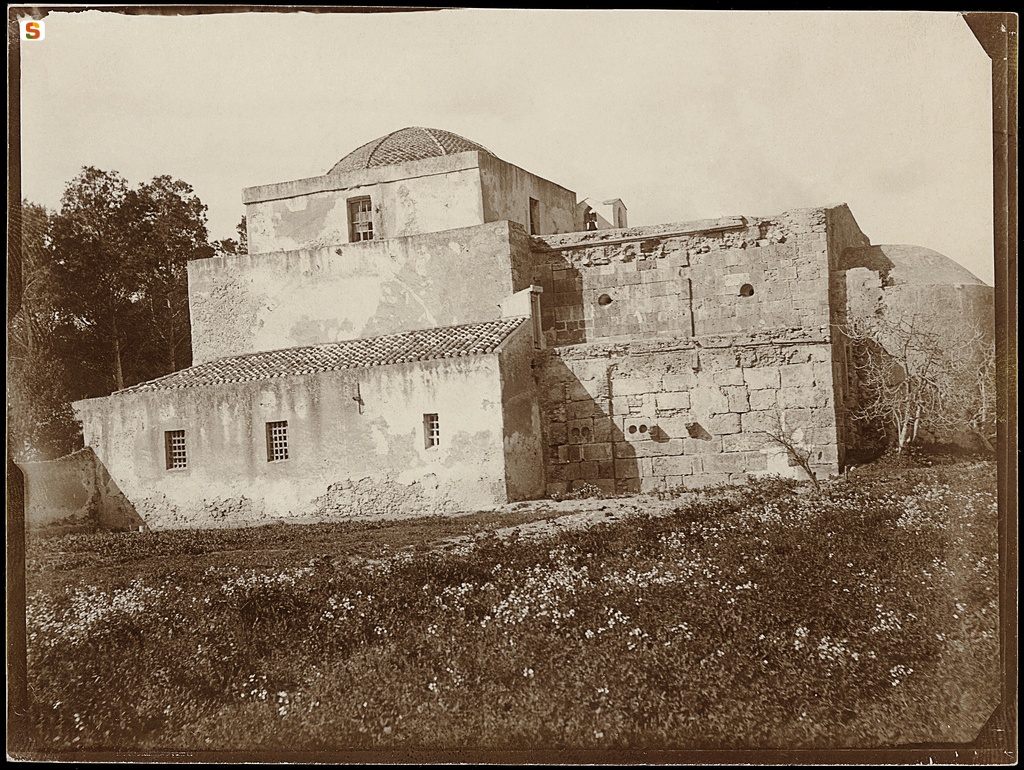
The basilica, in the town of Cagliari, overlooks a large square. The area on which it rises, at the foot of the hill of Bonaria, corresponds to the oldest Christian necropolis attested in the capital.
It is one of the oldest places of worship in Sardinia. The current basilica is the result of a long process of transformation of the building: in an area with a funerary vocation since the Punic Age, reused for the same purposes in Roman times, the tomb of the martyr was planted, which gave way to the use of the site as a Christian cemetery.
The basilica was erected in the burial place of the martyr Saturnino, who was slaughtered when he was only 19 years old, on 23 November 304, as his “Passio” handed down, and, according to tradition, buried under the apse. Today, the city of Cagliari worships and celebrates Saturn as its patron saint.
The oldest information about the basilica comes from a historical source from the 6th century: in the biography of Saint Fulgenzio di Ruspe, it is said that Fulgenzio, having to spend a period of exile in Sardinia, upon his arrival found an existing cult building dedicated to the martyr Saturninus where he had a monastery built.
Rather than with the grandiose cruciform domed church, the “basilica” that existed before Fulgenzio's arrival seems to have to be identified with the mononave worship hall, whose layout was brought to light in the early eighties of the last century, during excavations directed by Letizia Pani Ermini.
In 1089, the basilica was donated by Judge Constantine to the Vittorini monks of Marseille, who reconsecrated it only after thirty years, in 1119, perhaps because, at the time of the donation, the structure was in need of restoration, while they were able to immediately live in the monastery.
In 1327, with the arrival of the Aragonese, the monastery, abandoned by the Vittorini, was partially dismantled to obtain construction material to be used in the possessions of Berengario Carroz. After a period in which the area was disputed between Vittorini and the Order of San Giorgio di Alfama, the area was acquired, in 1444, by the archbishop of Cagliari, who had already collected its revenues for some time. In the second half of the 15th century, the basilica underwent restorations and the structural situation remained so at least until the 17th century.
History of excavations
The first systematic investigations date back to the end of the nineteenth century, by the will of the Superintendence for Monuments and the Archaeological Superintendence. In the nineties, excavations resumed in the area of Piazza San Cosimo, which brought to light numerous burials dating back to the first period of Christianity and the Byzantine phase. Numerous inscriptions have been found, almost all in Latin and with a typically Christian form.
Bibliography
L. Pani Ermini, “Research in the complex of S. Saturno in Cagliari”, in Proceedings of the Pontifical Roman Academy of Archaeology. Reports, LV-LVI, 1982-84, pp. 111-128; D. Mureddu-D. Salvi, “The Basilica of San Saturnino”, in D. Mureddu-D. Salvi- G. Stefani, Sancti Innumerables. Excavations in seventeenth-century Cagliari: testimonies and verifications, Oristano, S'Alvure, 1988;
L. Pani Ermini, “The martyrial complex of Saint Saturn”, in La Civitas christiana. Urban planning of Italian cities between Late Antiquity and Early Middle Ages. Aspects of urban archeology. Proceedings of the First Study Seminar, Turin, 1992, pp. 55-81;
M. Dadea, “The Basilica of San Saturnino”, in Cagliari: urban itineraries between archeology and art, Cagliari, 1999, pp. 39-41;
M. Dadea, “The Necropolis of San Saturnino”, in Cagliari: urban itineraries between archeology and art, Cagliari, 1999, pp. 44-45; P.G. Spanu, Martyria Sardiniae. The sanctuaries of the Sardinian martyrs, series “Late Antique and Medieval Mediterranean. Excavations and research”, Oristano, S'Alvure, 2000, pp. 51-60;
D. Salvi, “Cagliari: San Saturnino, the early medieval phases”, in On the Borders of the Empire. History, art and archeology of Byzantine Sardinia, curated by P. Corrias-S. Casentino, Cagliari, M&T Sardegna, 2002, pp. 225-229;
D. Salvi, “Cagliari: the cemetery area of San Saturnino”, in Insulae Christi. Primitive Christianity in Sardinia, Corsica and the Balearic Islands, edited by P.G. Spanu, Oristano, S'Alvure, 2002, pp. 215-223.
A. M. Colavitti - C. Tronchetti, Archaeological Guide to Cagliari. Sassari, C. Delfino, 2003 (Archaeological Sardinia. Guides and itineraries; 31), pp. 42-43.
Content type:
Archaeological complex
Archaeology
Province: Cagliari
Common: Cagliari
Macro Territorial Area: South Sardinia
POSTAL CODE: 09127
Address: piazza San Cosimo, s.n.c.
Telephone: +39 070 662496
E-mail: drm-sar.sansaturnino@cultura.gov.it
Website: musei.sardegna.beniculturali.it/musei/basilica-di-san-saturnino
Information on tickets and access: In order to visit the necropolis, it is necessary to refer to the Regional Directorate of Museums in Sardinia: website.
Update
Where is it
Images


 Facebook
 Twitter
 LinkedIn
 Whatsapp

 Print
Print
 E-mail
![[Cagliari. Chiesa San Saturnino]](data:image/png;base64,iVBORw0KGgoAAAANSUhEUgAAAAEAAAABCAQAAAC1HAwCAAAAC0lEQVR42mNkYAAAAAYAAjCB0C8AAAAASUVORK5CYII=)


Comments