Subjects





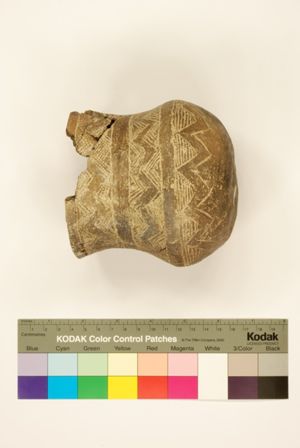
Closing the Eneolithic period (2100-1800 BC) came the important culture called the Campaniform Vase. The name derives from the “inverted bell” shape of the typical richly decorated glass, which characterizes the archaeological contexts attributable to this culture.
The culture of the Campaniform Vase appears to be present in many areas of Europe: in addition to Sardinia, we have attestations in Sicily, in part of northern Italy, in the southern coasts of France, in Spain, in the Rhine Valley, in Germany, in Poland, in Hungary, in the Netherlands, in Belgium, in England, in Scotland, in Ireland.
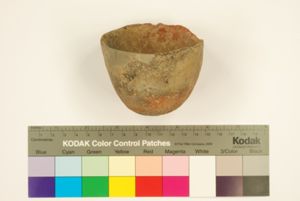
The ceramic productions are characterized, in addition to the above-mentioned glass, by an interesting morphological variety and by a typical tendency to cover vascular surfaces with dense decoration.
Equally interesting is another artifact, which appears for the first time in Sardinia precisely in bell-shaped settings: the “brassard”, a particular rectangular plate used by archers to protect the wrist from the vibration of the bowstring at the stroke of an arrow.
Archaeological evidence makes plausible the hypothesis that the bearers of the Campaniform Vase culture were itinerant metallurgists, able to interact peacefully with the local populations with whom they came into contact without losing their cultural identity.
Update
Images


 Facebook
 Twitter
 LinkedIn
 Whatsapp

 Print
Print
 E-mail


Comments