Subjects





In the final Neolithic (3200-2800 BC) there are the material manifestations of one of the most important cultures in Sardinian history, the culture of Ozieri or San Michele, names deriving from the cave of San Michele located near the current town of Ozieri. This is the first Sardinian culture whose archaeological evidence appears on the entire surface of the island. In this phase, the number and extension of villages increases considerably, in response to growing demographic pressures and the intense and extensive exploitation of agricultural resources.
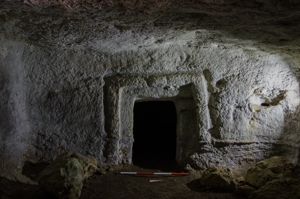
We obtain important information on the structure of wooden huts from some tombs built imitating the very shape of housing structures. Typical in this sense is the rectangular hut with a double sloping roof supported by a solid wooden entablature.
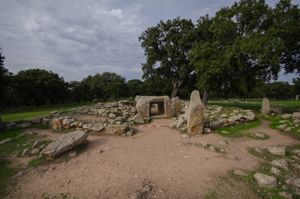
Tomb typologies are increasingly diversifying: so we have the domus de janas, the circle tombs, the covered allées, which are often accompanied by dolmens and menhirs.
The small sculptures representing the Mother Goddess, associated with funerary contexts, go from the steatopic naturalistic forms, typical of the Bonu Ighinu style, to a strongly stylized pattern called a cross.
The ceramic productions are enriched with decorations with circles, spirals, festoons, stars and human figures, which find significant extra-insular comparisons, in particular with the Cycladic and Cretan area.
In addition to the traditional processing of flint and obsidian, we have the first attestations of the extraction and processing of metals, in particular copper, as evidenced by dagger blades and jewelry found in funerary equipment.
Update


 Facebook
 Twitter
 LinkedIn
 Whatsapp

 Print
Print
 E-mail


Comments