Subjects





One of the most typical forms of artistic craftsmanship in Phoenician culture was certainly goldsmithery.
Phoenician goldsmith productions represent in fact one of the qualitative peaks reached in the entire Mediterranean basin in this historic phase.
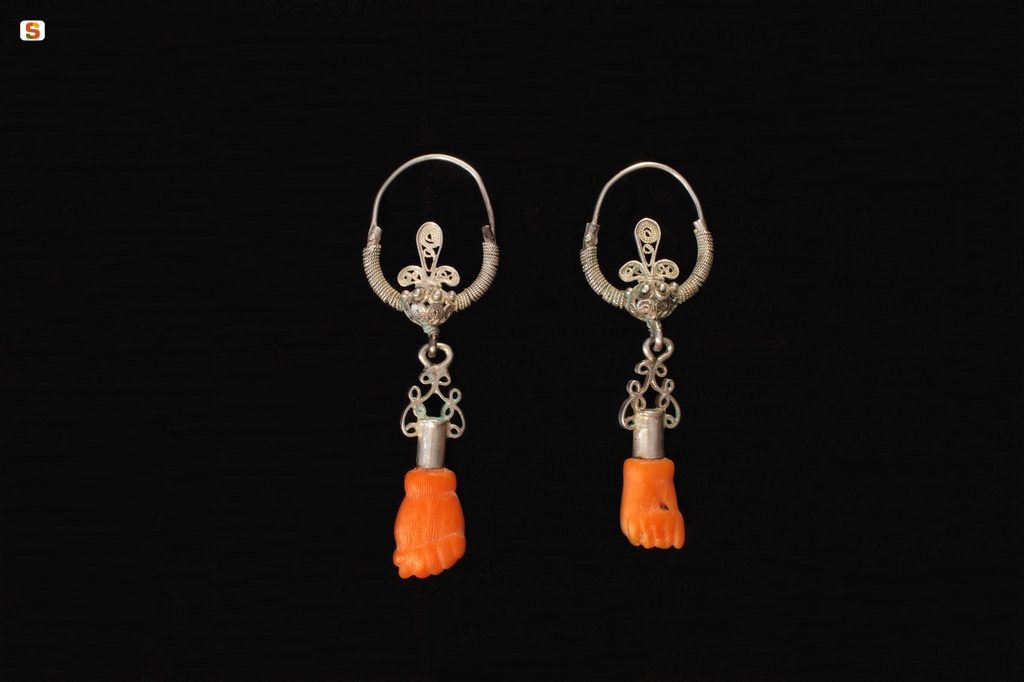
Phoenician goldsmiths practiced with particular mastery the techniques of filigree and granulation, not surprisingly still typical of traditional Sardinian goldsmithery.
Sardinia in particular has returned archaeological evidence of enormous value, both from a qualitative and quantitative point of view.
From this point of view, a prominent place belongs to the jewels coming from the necropolises of the urban center of Tharros, located on the coast of Oristano.
The jewels of Tharros, as well as probably most of those found in other Sardinian urban centers, were locally produced, demonstrating the high degree of technical and aesthetic refinement achieved by the island's craftsmen.
The range of objects produced appears to be very wide: plate bracelets with filigree work, bracelets with holes in hard stone and gold, hoop earrings, angled cross earrings, pendants with figures of birds, pendants with plant motifs, amulets, scarabs, etc.
Update
Images
Audio


 Facebook
 Twitter
 LinkedIn
 Whatsapp

 Print
 E-mail




Comments